
Real Dino Blood Survived 115 Million Years Thanks to a Microscopic Mineral Time Capsule
Researchers found chemically verified blood components inside a Brazilian meat-eater, shattering old rules about how long organic material can survive.
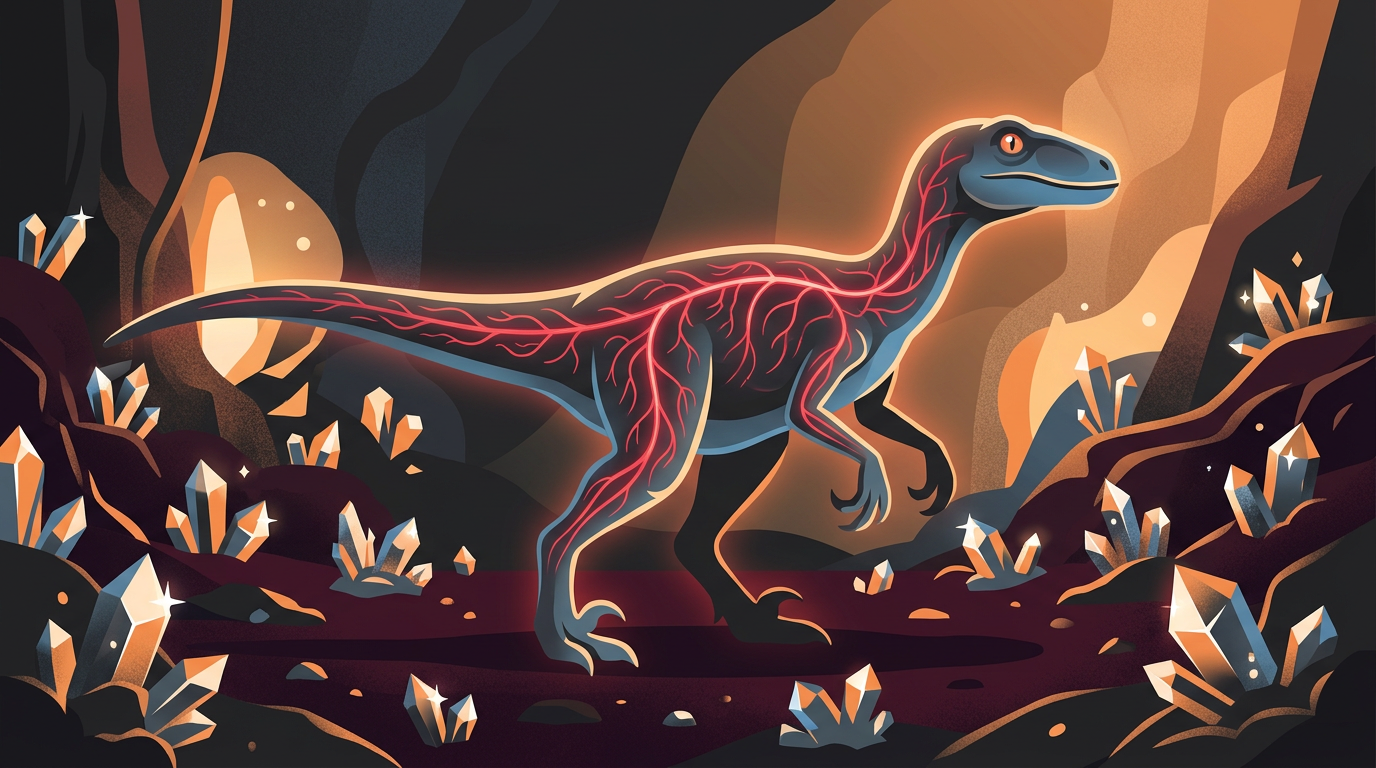
If you had 115-million-year-old dinosaur blood preserved on your paleontology bingo card, go ahead and collect your prize. Scientists examining the leg bones of a predatory dinosaur from Brazil just made a mind-blowing discovery: actual chemical traces of ancient blood that have been quietly hanging out since the Cretaceous period.
Before you start looking around for amber-topped canes and mosquito farms, let's clear one thing up. We aren't cloning a squad of wild predators tomorrow. But what researchers actually uncovered inside this ancient creature is arguably even cooler than movie magic.
The Ultimate Prehistoric Blood Donor
The star of this story is Aratasaurus museunacionali, a sleek theropod dinosaur that once roamed northeastern Brazil. While previous fossil studies have occasionally spotted microscopic shapes that looked suspiciously like cells, this discovery marks a massive leap forward. This time, scientists performed rigorous chemical testing to prove that true biological molecules were trapped inside preserved red blood cells.
Specifically, they detected intact heme molecules—the iron-bearing chemical structures that make up hemoglobin and carry oxygen through living bodies. That means we now have solid chemical receipts showing preserved blood components hiding inside 115-million-year-old dinosaur bones.
How to Freeze Time for 115 Million Years
So how on earth does soft, delicate biological matter survive long after continents drift and oceans shift? The secret lies in the microscopic real estate of the dinosaur's limb bones.
Inside tiny vascular canals where blood vessels used to run, a specific mineral called hausmannite moved in. Think of hausmannite as nature's ultimate vacuum sealer. It filled those microscopic spaces, creating a tight shield that locked down fragile biological materials—including heme structures and amino acids from collagen—and kept them from completely disintegrating over geological eras.
An international team of researchers from Australia, Brazil, Japan, and the United States teamed up to crack open this chemical cold case, proving that complex organic molecules can stick around vastly longer than standard scientific models ever predicted.
The Otterly Interesting Part
Here is what makes this discovery so endlessly cool: for a long time, conventional wisdom suggested organic matter had a strict expiration date and would break down completely after a couple million years at most. Now we know that with the right mineral bodyguard, nature can preserve biological clues across truly breathtaking stretches of deep time. It makes you wonder how many other impossible scientific treasures are sitting inside museum drawers right now, just waiting for the right tech to spot them.
Fresh Clues from Deep Time
While researchers are still exploring the precise environmental conditions that allowed this microscopic armor to form, one thing is clear: ancient predatory dinosaurs were full of heart, collagen, and chemically verifiable blood.
What ancient biological mystery do you hope scientists unlock next from the fossil record?
Keep exploring
- Meet the Turtle That Folds Up Like a Swiss Army Knife
- Forget Fast & Furious: Sydney Put Two Vintage Steam Trains in a Side-by-Side Drag Race
- Scientists Created a Gel That Turns Your Spit Into Tooth Armor
- Take an Otter quiz
Otterly agree? Tell us why.
Join the conversation
Kind, funny and useful takes only — that's the otter way.
Loading comments…