The Busboy Who Decided He Deserved as Much Respect as a Billionaire
Before he co-founded Ritz-Carlton, Horst Schulze was a small-town teen emptying ashtrays and asking a radical question: why shouldn't service staff be treated like royalty too?
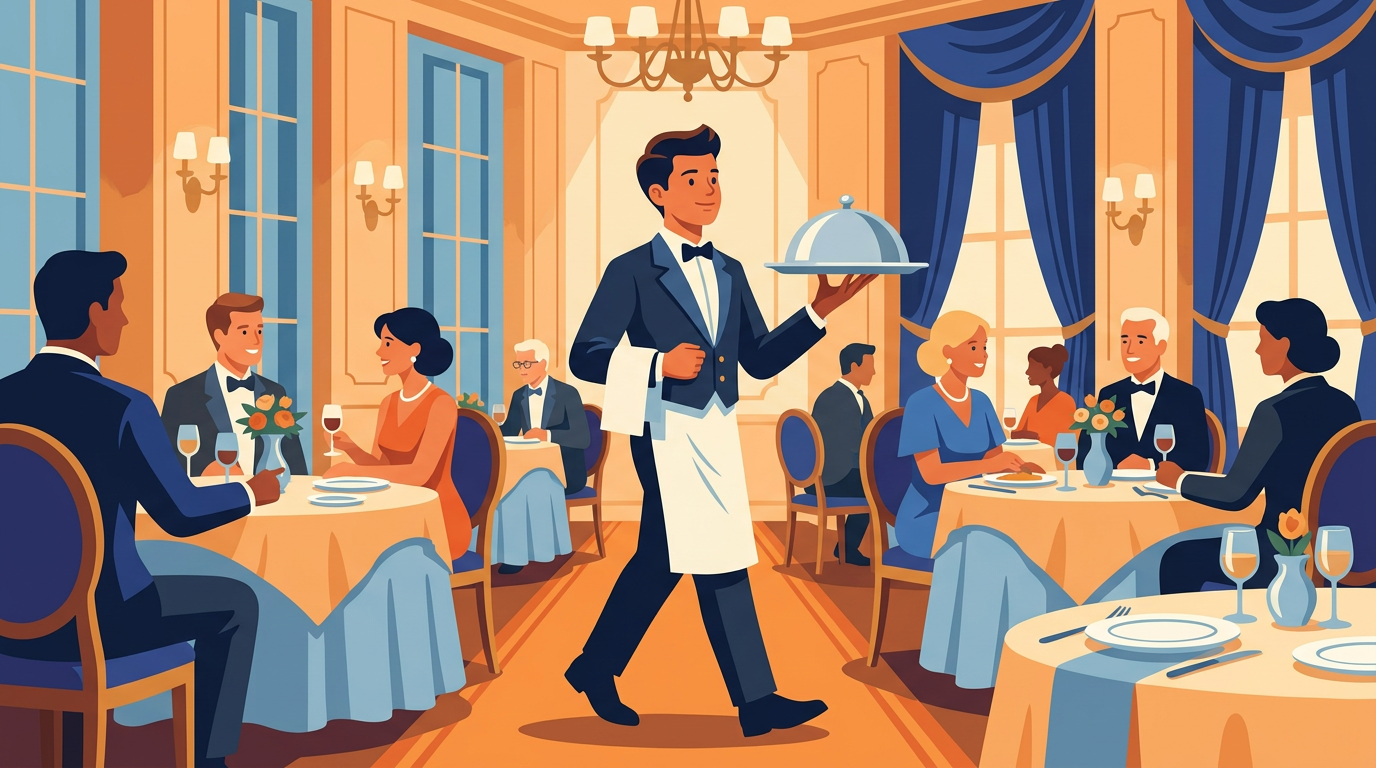
Picture this: You are 11 years old, living in a quiet German village where the grandest building is probably the local bakery. You have never stepped foot inside a hotel in your entire life. Yet, with complete, unshakeable confidence, you turn to your parents and announce that you are going to spend your life running high-end luxury hotels.
That was Horst Schulze. And while most 11-year-olds change their dream job three times before lunch, Schulze actually went out and did it. By age 14, he had packed his bags, left home, and landed a job as a humble busboy.
He didn't know it yet, but a simple observation he made as a teenager wiping down tables would eventually reshape the entire global hospitality industry.
The Epiphany Beside the Dining Room Table
Starting at the bottom of the hotel food chain means doing the stuff nobody else wants to do. Schulze spent his early teens scrubbing dishes, carrying luggage, making beds, and cleaning up after wealthy guests in fancy European dining rooms.
It would have been easy to feel invisible—or worse, inferior. But Schulze noticed something fascinating while watching the hotel's maître d' interact with the elite clientele.
The guests weren't looking down on the maître d'. They treated him with genuine admiration, warmth, and dignity. The maître d' carried himself not as a servant begging for tips, but as a master of his craft. He was a gentleman in every sense of the word, providing a world-class experience to other gentlemen and ladies.
That was the spark. Schulze realized that service wasn't about being subservient. It was a proud profession. If you brought excellence to your work, you earned the right to stand shoulder-to-shoulder in human dignity with anyone, no matter how much money was in their bank account.
The Homework Assignment That Made History
While attending hotel school during his teenage years, Schulze was tasked with writing an essay about his philosophy on hospitality. He distilled his big realization down into a single, punchy phrase:
"We are ladies and gentlemen serving ladies and gentlemen."
It was a simple idea, but a radical one. It declared that the person carrying the tray and the person eating off it were functional equals. The waiter was not lower class; the guest was not superior. They were simply two humans engaging in an exchange of excellence and respect.
Schulze carried that sentence with him as he worked his way up the ladder, moving to the United States in the 1960s and taking leadership roles at major hotel chains like Hilton and Hyatt. He knew the business inside and out because he had literally done every job in the building.
When he later co-founded Ritz-Carlton, he brought his teenage philosophy with him. He made that exact sentence the official company motto, ensuring every new hire understood that their dignity was just as important as the luxury experience they provided.
The Otterly Interesting Part
There is a sneaky secret to Schulze’s leadership style that most corporate executives miss. Because he spent his early years elbow-deep in suds as a dishwasher and making beds from scratch, he couldn't be fooled by top-down theories. He managed from the perspective of the person holding the mop.
By teaching his staff that they were "ladies and gentlemen," he gave them ownership of their work. The result? Workers who felt respected ended up treating guests far better than any mandatory training script could ever force them to. Turns out, treating your team like human beings is actually a fantastic business strategy.
A Little Dignity Goes a Long Way
The next time you're out having dinner or grabbing a coffee, take a second to appreciate the person behind the counter. Horst Schulze’s story is a great reminder that true class isn't about what's on your bank statement—it's about how you treat the people around you, and how much pride you take in whatever you do.
Have you ever had a job where a small change in culture made you feel like a million bucks?
Keep exploring
- Meet Enoki: The Clever Red Panda Turning Puzzle Time Into Snack Time
- The Physicist Who Built Robot Tutors to Teach Birds Their Ancestors' Forgotten Jams
- Scientists Accidentally Invented the World's Most Expensive Deep-Sea Cat Toy
- Take an Otter quiz
Otterly agree? Tell us why.
Join the conversation
Kind, funny and useful takes only — that's the otter way.
Loading comments…