California Brought Back Beavers After 70 Years—and the Little Guys Are Already Surfing
After seven decades of exile, California’s native engineers are back on the job, turning suburban mischief into eco-magic.
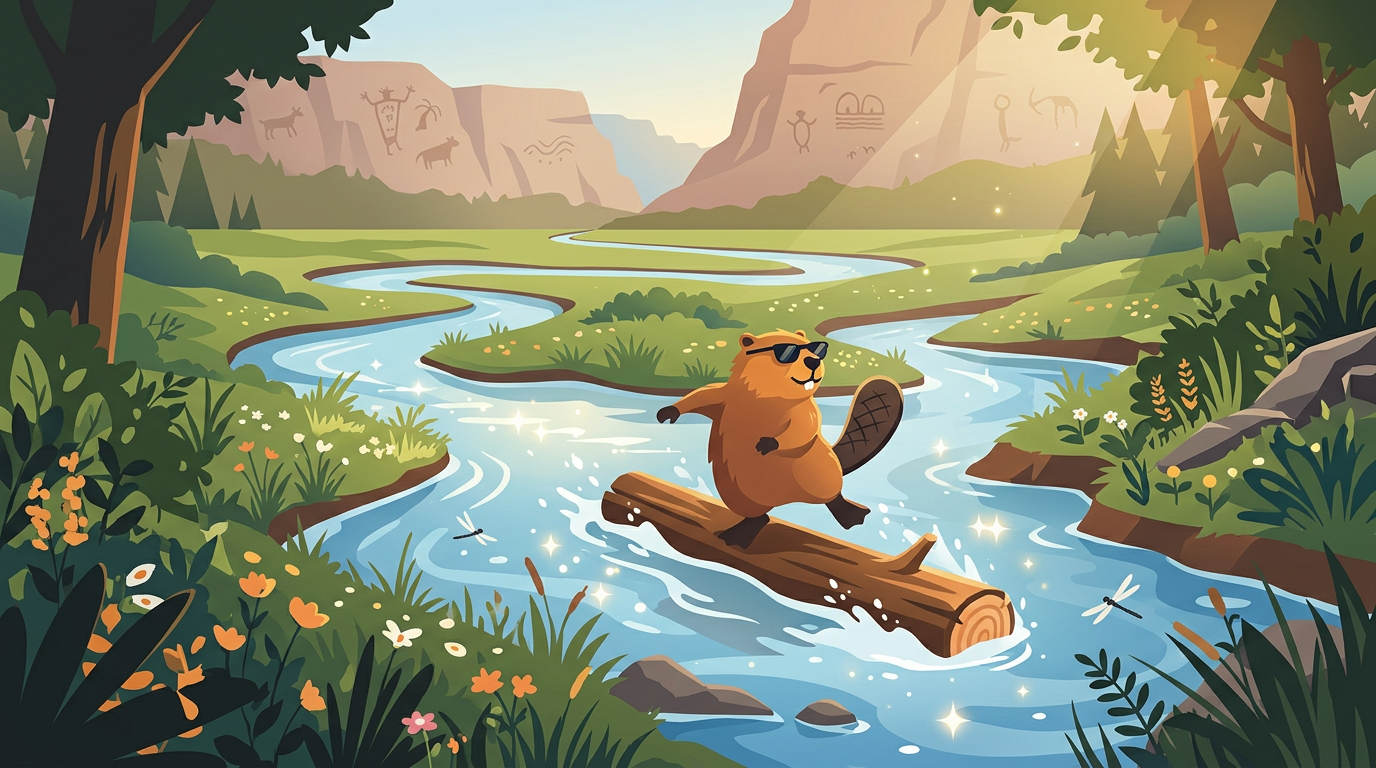
Imagine getting evicted from a suburban neighborhood for being an overzealous plumber, only to get airlifted to a scenic mountain valley where your obsession with building dams is treated like pure genius. That is precisely the wild career pivot currently happening for California's beaver population.
For more than seven decades, official state policy kept a tight lid on reintroducing beavers. But thanks to a historic partnership between state wildlife officials and Native American tribes, the furry hydraulic engineers are back in business. And honestly? They are crushing it.
Ancient Wisdom Meets Modern Eco-Engineering
The inspiration for this whole comeback story wasn't dreamed up in a high-tech lab. It was inspired by history. Tribal leaders and researchers re-examined ancient Indigenous rock paintings—specifically a Yokuts rock painting between 500 and 1,000 years old—showing a unmistakable four-pawed creature with a wide paddle tail. The artwork highlighted what Native communities knew for centuries: beavers are vital stewards of natural water systems.
Recognizing that nature’s best water managers were being left on the sidelines, state wildlife authorities teamed up with local tribes to launch the first official beaver restoration initiative in over 70 years.
From Suburban Pest to Mountain Hero
So how do you staff a beaver restoration project? You look for the local troublemakers.
In urban and developed areas, beavers are often considered a nuisance because their relentless urge to dam up streams can flood backyards, golf courses, or roads. Instead of removing them permanently, crews now carefully capture these urban tail-slappers and relocate them to drought-prone ecosystems that desperately need natural water retention.
On October 18, 2023, the first crew of seven lucky beavers was released into Tásmam Koyóm, a breathtaking 2,325-acre valley in Plumas County. The relocation program quickly picked up steam. By September 2024, a total of 28 relocated beavers had been settled across five distinct release sites.
The Otterly Interesting Part
Here at The Laughing Otter, we appreciate any animal that understands the art of having fun while working hard. Program manager Valerie Cook caught a glimpse of the newly relocated family settling into their home and witnessed something unforgettable: a tiny baby beaver piggybacking on its older sibling's flat tail, gliding across the pond like a tiny furry wakeboarder.
That’s right—California's newest ecological saviors are literally tail-surfing into their new lives.
A Wetland Renaissance in Progress
While scientists are still monitoring the long-term impact to measure exactly how much these busy builders will mitigate regional drought across California over time, early signs of habitat revival are giving experts plenty of reason to cheer. By holding back stream flow, beaver dams raise local water tables, create lush wetland oases, and store water naturally during dry months.
It turns out that fixing complex environmental problems doesn't always require millions of dollars in heavy machinery. Sometimes, all you need is a family of flat-tailed rodents with a passion for carpentry and a rad sense of balance.
Keep exploring
- The Covert CEO: How Rose Knox Secretly Built a Gelatin Empire
- Forget Career Counselors: Ray Bradbury Found His Calling from a Guy in an Electric Chair
- One Exhausted Bear Parent and Three Cubs Just Invented the Ultimate Forest Splash Zone
- Take an Otter quiz
Otterly agree? Tell us why.
Join the conversation
Kind, funny and useful takes only — that's the otter way.
Loading comments…