
Scientists Dumped 30 Truckloads of Coffee Waste on Barren Land. Two Years Later, an Instant Jungle Showed Up.
When researchers dumped 30 truckloads of leftover coffee pulp onto degraded farmland, they triggered a forest growth spurt that blew everyone away.
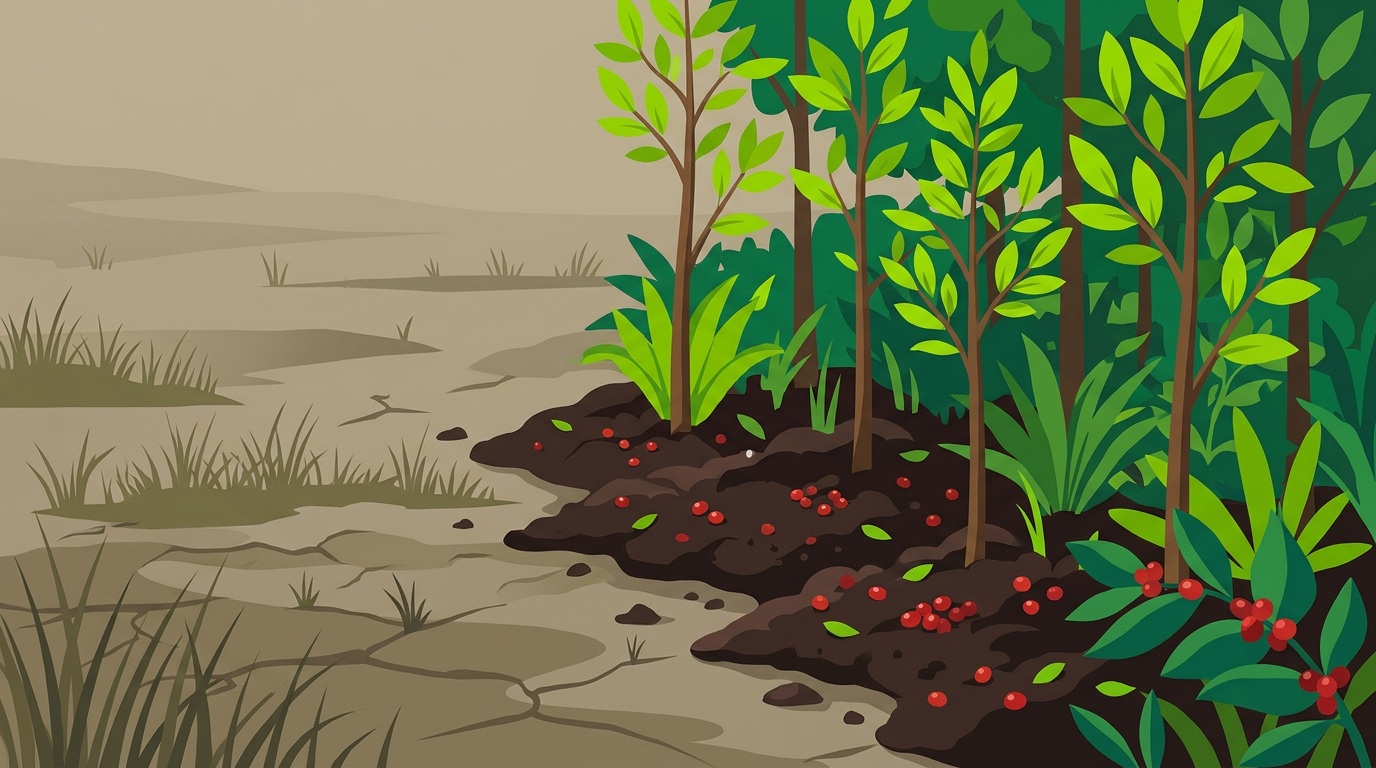
If you have ever tried to function on a Monday morning before your first cup of coffee, you know the feeling. You are sluggish, unfocused, and essentially a background asset in your own life. Well, it turns out degraded farmland feels the exact same way—and the cure might be surprisingly familiar.
Back in 2018, researchers decided to try a wild experiment on a stripped-down patch of former agricultural land in Costa Rica. They took 30 massive truckloads of raw coffee pulp—the slimy, fruity outer layer peeled off coffee beans and discarded during processing—and dumped it roughly 20 inches deep right over the degraded soil.
Two years later, when they returned to check on their mega-compost pile, they did not just find a few brave sprouts. They found a full-blown, turbocharged mini-jungle.
The Ultimate Breakfast of Champions for Soil
To understand why this worked so astonishingly well, it helps to realize how much stuff gets thrown away when coffee is made. When coffee cherries are harvested, only the inner bean is saved for roasting. The remaining fruity casing—which makes up about 45 percent of the total coffee cherry weight—is thrown out. Globally, that adds up to roughly 10 million tons of sticky, nutrient-dense coffee pulp waste every single year.
Normally, leftover agricultural land in tropical regions gets quickly overrun by aggressive invasive grasses. These hyper-competitive weeds lock up the root zone and prevent native forest seeds from taking root.
That is where the 20-inch layer of coffee fruit sludge came in clutch. It acted like a giant, suffocating blanket, smothering those bully grasses completely by blocking out light. Meanwhile, as the coffee fruit decomposed, it dumped massive hits of nitrogen, phosphorus, and carbon straight into the soil underneath.
Four Times the Growth in 24 Months
When researchers surveyed the landscape after two years, the contrast was staggering. The untreated land right next door was still a dull patch of aggressive grass with barely 20 percent canopy coverage.
The plot treated with coffee pulp? It was sitting pretty at 80 percent canopy cover. Even better, the native trees on the coffee-fueled plot had grown four times taller than those on the untreated ground. Native forest species were thriving, animal life was creeping back in, and the soil was rich and healthy once again.
While this is not a universal silver bullet for every single deforested location on Earth—different soils and climates have different needs—it shows that what we often treat as useless agricultural trash might actually be ecological rocket fuel.
The Otterly Interesting Part
Think about the sheer serendipity of nature here. Humans spend immense time and resources trying to formulate synthetic fertilizers to fix damaged land, while the coffee industry produces millions of tons of biological gold every year that often rots in massive waste heaps. It turns out the planet runs on coffee too—it just prefers the whole fruit instead of a double espresso.
Could Waste Be the Secret to Reforestation?
Finding ways to pair agricultural food waste with damaged ecosystems is a win-win that almost feels too easy. So the next time you sip your morning brew, take a moment to appreciate the humble coffee cherry. It is not just powering your day—it might just hold the key to waking up sleeping forests around the world.
Keep exploring
- Scientists Resurrected Jurassic Proteins, and They Absolutely Crush Modern Superbugs
- A Pregnant Flying Fox Survived a Roadside Scare—and Spent Her Recovery Giving World-Class Side-Eye
- Decoding the Midnight Zoomies: Why Your Cat Treats 3 AM Like the Olympics
- Take an Otter quiz
What's your take?
Join the conversation
Kind, funny and useful takes only — that's the otter way.
Loading comments…