
Before GPS, WWII Aircrews Trusted Their Lives to These Absolute Units of the Sky
How WWII's bravest homing pigeons battled extreme Atlantic storms and anti-aircraft fire to deliver life-saving intelligence.
The Original High-Speed Network
Long before satellite phones, Wi-Fi, or even reliable radio signals, military commanders faced a very ancient problem: how do you send an urgent message across an ocean when the weather is terrible, radio silence is mandated, and planes can't even launch?
The answer, as it turned out, was sitting on a porch cooing at breadcrumbs.
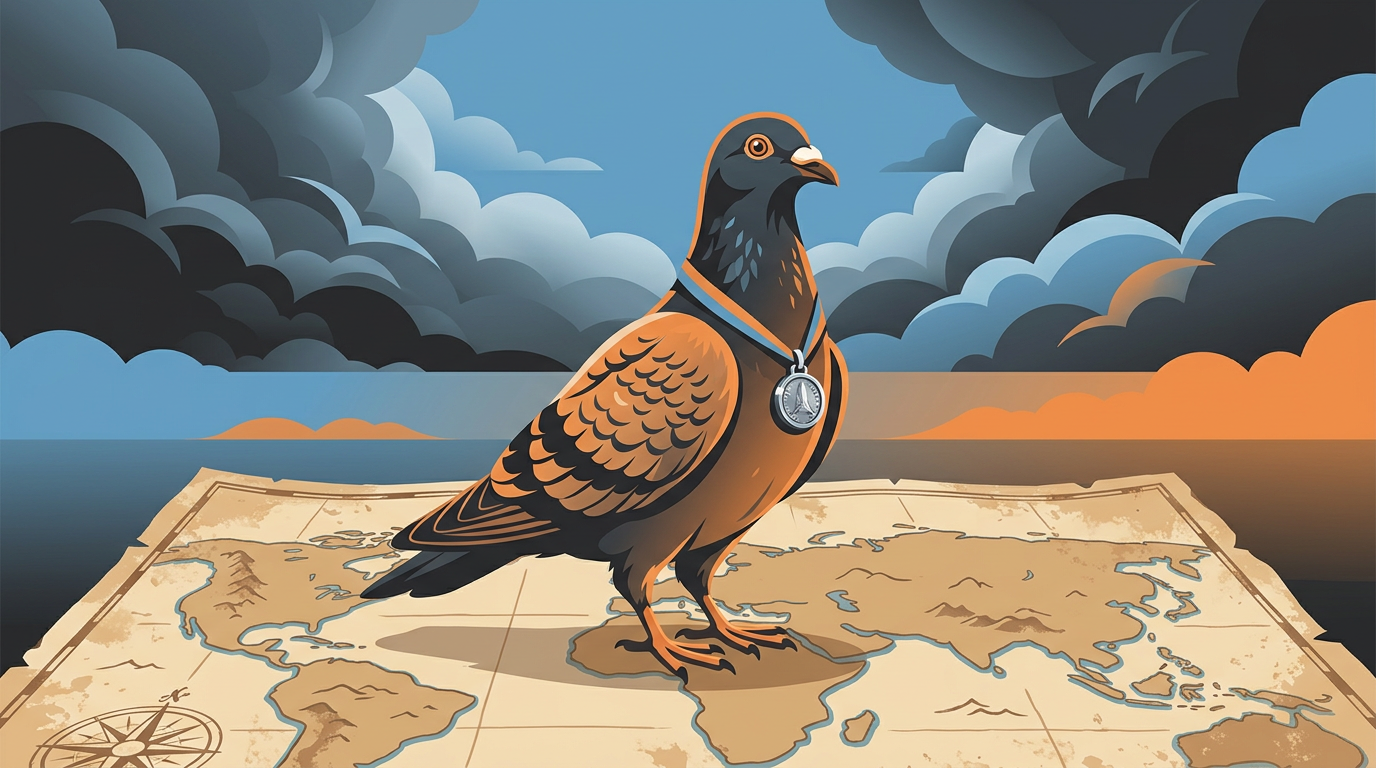
Homing pigeons were the unsung aviators of the Second World War. Equipped with an uncanny internal compass and a stubborn refusal to give up, these feathered couriers flew through freezing gales, torrential rain, and hostile skies to deliver critical intelligence.
Medal-Worthy Bravery in the Skies
To recognize animals displaying incredible gallantry in combat, a remarkable woman named Maria Dickin—who had founded the People's Dispensary for Sick Animals back in 1917—established the Dickin Medal in 1943. Think of it as the highest possible honor for non-human service members.
And who were the very first heroes to receive this prestigious medal on December 2, 1943? A trio of unstoppable homing pigeons named Tyke, White Vision, and Winkie.
Each of them earned their medals by helping rescue downed British aircrews who were stranded at sea after emergency landings. When radios failed or broke on impact, releasing a pigeon was often a crew's absolute last hope for survival.
Nine Hours Through a North Atlantic Nightmare
Take the story of White Vision. When an aircrew was forced down into the icy North Atlantic, conditions were so brutal that search-and-rescue aircraft were completely grounded. The situation looked desperate.
Enter White Vision. Released into a raging storm, she battled severe turbulence, head winds, and freezing conditions for nine grueling hours. She pushed through the tempest to deliver the exact coordinates of the downed crew. Thanks to her relentless endurance, rescuers located and saved all eleven men within 18 hours.
Then there was Beach Comber, a legendary Canadian pigeon who braved hazardous conditions to bring back the very first intelligence reports during the Dieppe landings in 1942.
And if you wanted sheer speed, you called Paddy. On D-Day in 1944, Paddy rocketed across the English Channel, covering a distance of 230 miles in under five hours. He set a record for wartime message delivery and ensured critical operational updates reached headquarters without delay.
The Otterly Interesting Part
Here is what really blows our minds: homing pigeons can fly up to 60 miles per hour and cover hundreds of miles without stopping, navigating using a mix of Earth's magnetic fields, visual landmarks, and low-frequency sound waves. While we struggle to find our car in a shopping mall parking lot without checking our phones twice, these birds were routinely outperforming state-of-the-art military hardware in the middle of a warzone.
Giving Credit Where It's Cooed
Next time you see a pigeon casually strutting down a city sidewalk looking for dropped pretzel crumbs, give them a little nod of respect. Underneath those derpy head-bobs lies the legacy of feathered legends who outflew severe weather, crossed oceans, and carried the fate of entire missions on their tiny ankles.
Have you ever relied on low-tech ingenuity to get out of a jam?
Keep exploring
- Before Screens, We Had Flames: How Campfires Invented Nighttime Storytelling
- Divorced? Actually, No: The Tudor Legal Loophole That Rewrote Pop History
- The Guest Who Wouldn't Leave: How Five Weeks Destroyed a Literary Friendship
- Take an Otter quiz
Have something to add?
Join the conversation
Kind, funny and useful takes only — that's the otter way.
Loading comments…