
The Earliest-Born Voice Ever Recorded Belonged to History's Ultimate Introvert
Prussian army chief Helmuth von Moltke spent eight decades mastering the art of keeping quiet—only to accidentally make audio history.
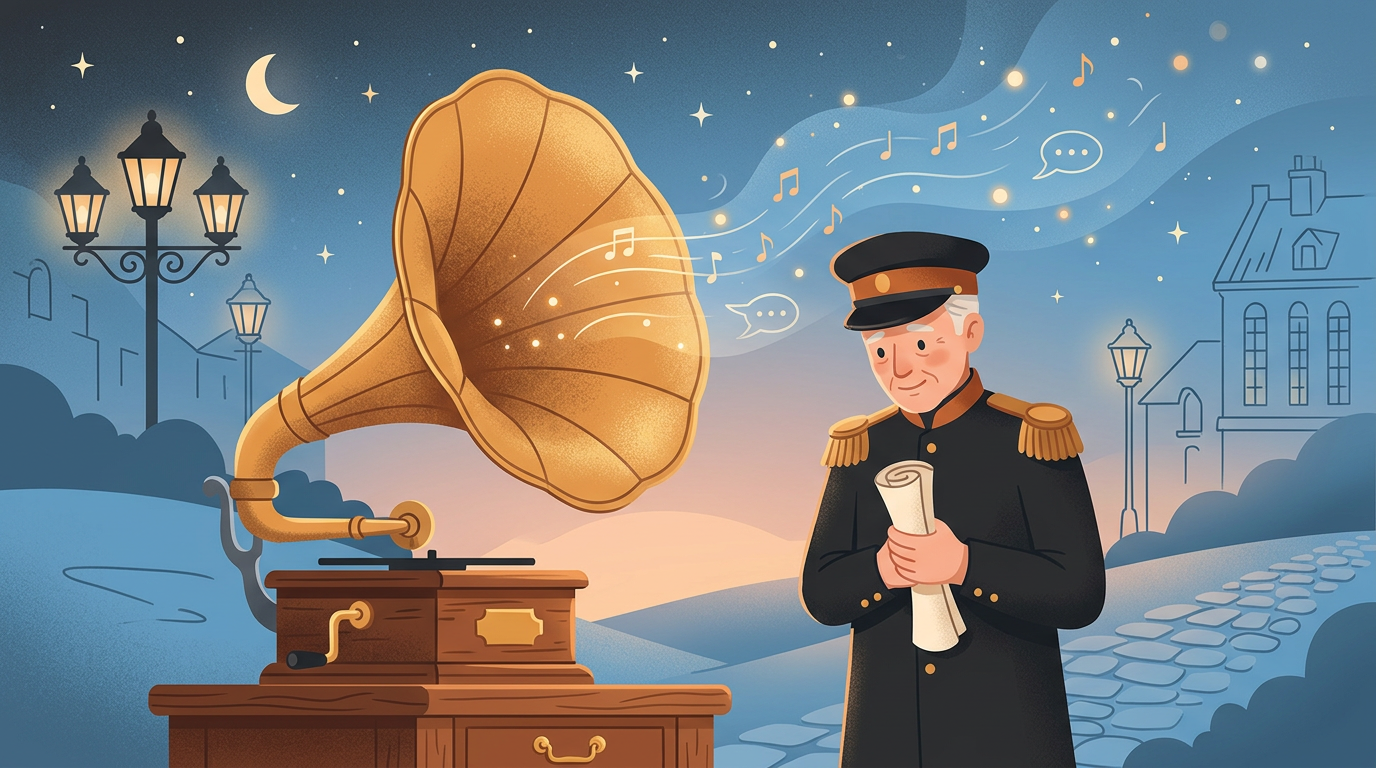
Imagine spending nearly nine decades building a reputation as the most taciturn, low-key person in Europe. You dodge unnecessary chatter, you master the art of meaningful silence, and folks literally nickname you "The Great Silent One." Then, at age 89, a guy shows up with a brand-new invention called a phonograph, and suddenly your voice is immortalized for the rest of human history.
That is the delightful historical twist of Field Marshal Helmuth von Moltke the Elder. Born in 1800, Moltke holds the unique distinction of being the earliest-born human being whose spoken voice was ever recorded and preserved.
Silent in Seven Languages
Born at the turn of the 19th century—an era when long-distance travel still meant hopping on a horse and photographs were not even invented yet—Moltke grew up to become the chief of staff for the Prussian Army. He was a brilliant strategic thinker and a prolific writer. But when it came to speaking? He preferred to keep things brief. Extremely brief.
In fact, contemporaries famously joked that Moltke was "silent in seven languages." If there had been an award for dodging small talk at dinner parties, he would have taken home the trophy without offering an acceptance speech.
Edison's Wax Cylinders Come Knocking
Meanwhile, technology was catching up to the quiet general. Back in 1877, Thomas Edison amazed the world by recording himself reciting lines from the nursery rhyme "Mary Had a Little Lamb" onto a crude tinfoil cylinder. About ten years later, his team refined the technology into wax cylinder recordings, which could capture far clearer sound.
In 1889, Edison's assistant Theo Wangemann embarked on a European tour with a clear mission: capture the voices of the era's most prominent figures. Wangemann managed to record heavyweights like Chancellor Otto von Bismarck and composer Johannes Brahms. Naturally, he also paid a visit to the famous 89-year-old military chief in Germany.
Moltke stepped up to the acoustic recording horn and recited lines from Shakespeare's Hamlet and Goethe's Faust. Just like that, the quietest man in Prussia became the earliest-born human voice preserved on audio.
The Otterly Interesting Part
While Moltke holds the crown for the earliest-born voice on record, he does not hold the title for the earliest-born person ever captured on media. That honor belongs to Revolutionary War veteran Conrad Heyer, who was born in the mid-1700s and lived long enough to sit for a photograph in his twilight years. Still, there is something wonderfully ironic about a guy who spent 89 years perfecting quiet reserve becoming our very first vocal link to the year 1800.
Talk About an Echo
Moltke passed away in 1891, but those fragile wax cylinders survived, carrying a whisper across centuries. It just goes to show that no matter how hard you try to avoid small talk, groundbreaking technology always finds a way.
If you could travel back in time with a pocket audio recorder, whose voice from history would you want to capture first?
Keep exploring
- Next Time Someone Steals Your Idea, Thank an 18th-Century Playwright
- Matchmaking, Jazz, and Mild Mischief: How to Host a 1926 Halloween Party
- At 47 Years Old, This Senior Sloth Just Became a Father Again—And It's Pure Joy
- Take an Otter quiz
What's your take?
Join the conversation
Kind, funny and useful takes only — that's the otter way.
Loading comments…