Under UV Light, Europe’s Most Toxic Salamander Is Basically a Walking Glow Stick
Europe’s black-and-yellow fire salamanders have secretly been sporting a vibrant cyan-and-green neon glow—complete with toxic fluid that lights up like a forgotten rave.
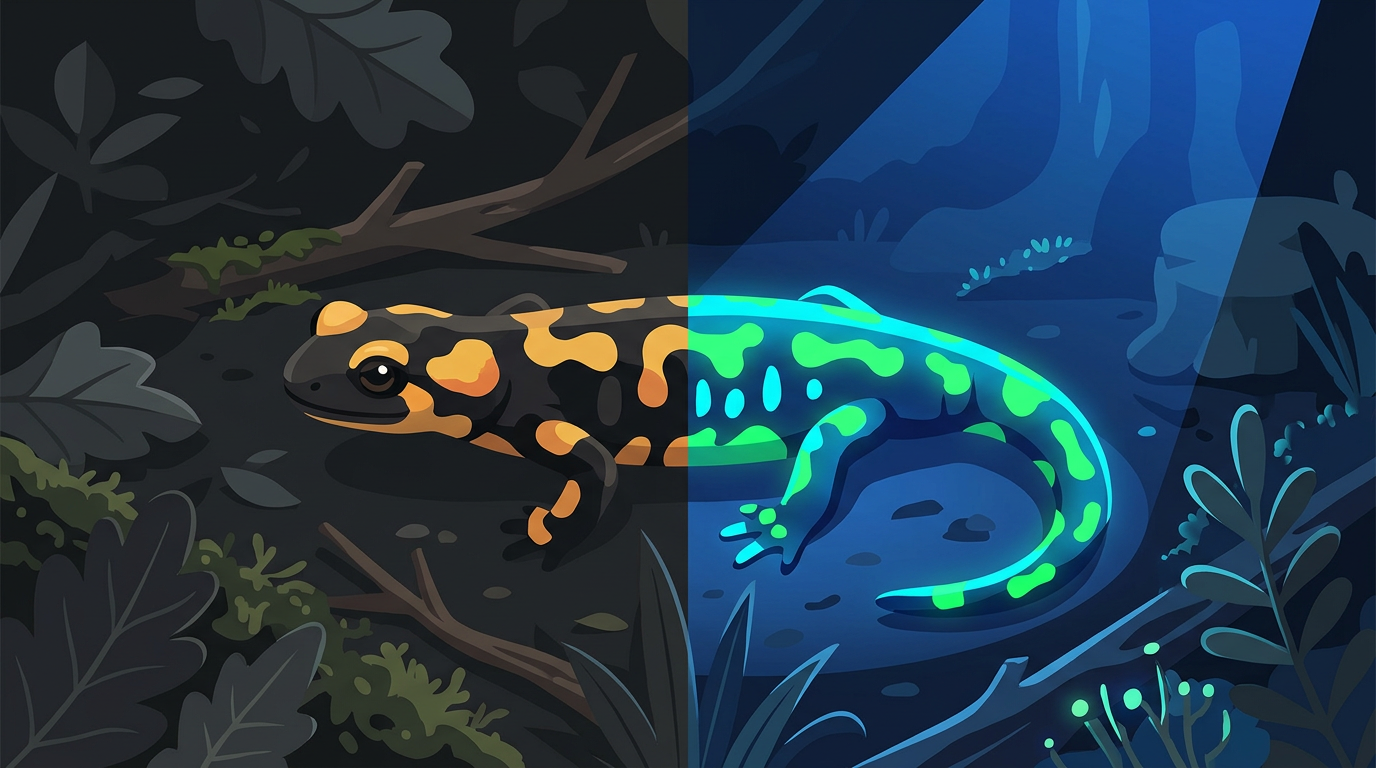
Imagine strolling through a cool, damp European forest at night, clicking on a blacklight flashlight, and discovering that the local wildlife looks like it just stumbled out of a 1990s night club. That is essentially what happened when researchers took a closer look at the fire salamander (Salamandra salamandra).
For centuries, humans have known these flashy creatures by their bold black-and-yellow warning stripes. But it turns out we were missing the coolest part of the show simply because our eyes couldn't see it without a little help.
The Secret Glow-Stick of the Forest
When exposed to ultraviolet radiation, the fire salamander lights up in vivid shades of neon cyan and bright green. The display is most intense along the creature's yellow belly and flanks.
To be clear, this isn't bioluminescence—the trick fireflies use to make light from scratch through chemical reactions. This is biofluorescence, meaning the salamanders absorb invisible, high-energy UV light and re-emit it as visible, lower-energy colors. To human eyes, they look completely normal under sunlight, but under a UV lamp, they turn into tiny walking neon sculptures.
Toxic Glow Juice (Literally)
Here is where things get genuinely wild: the glow isn't just a surface-level coat of paint. The light originates directly from specialized glands in their skin and the defensive toxins they secrete when feeling threatened.
When a fire salamander squirts out its toxic defensive fluid, that venomous liquid actually continues to glow under UV light for more than 24 hours after leaving the salamander's body. That means a startled salamander literally leaves a glowing neon trail of toxic fluid behind on the forest floor.
Why the Neon Display? It’s a Mystery
So why are these toxic little amphibians covertly shining in the dark? Here is the fun part: science hasn't figured that out yet.
While it is tempting to assume the glow helps them whisper sweet nothings to potential mates or acts as a high-visibility hazard sign to keep predators from eating them, those ideas are strictly unproven theories for now. For all we know, the fluorescent glow might just be a bizarre, accidental byproduct of the complex chemical makeup of their toxins.
The Otterly Interesting Part
While discovering hidden neon wildlife is an absolute delight, it also arrives with an important reminder. The IUCN Red List currently classifies the fire salamander as a vulnerable species, largely driven by ongoing habitat destruction across Europe.
Led by first author Bernat Burriel from the Museum of Natural Sciences in Barcelona, this illuminating discovery gives conservationists a brilliant new perspective on a classic species. It turns out that even animals we thought we knew inside and out still have incredible secrets waiting to be illuminated.
So next time you take a midnight walk in the woods, you might want to pack a UV flashlight. You never know who's silently holding a secret glow party right beneath your boots.
Keep exploring
- Lesson Plans for Donkeys: Why Morning Snuggles Are Step One of Farm Training
- Someone Had a Very Bad Day 4,500 Years Ago—and Left Us the World's Oldest Shipwreck
- Why Getting Tricked by a Dumb Riddle Feels So Unreasonably Good
- Take an Otter quiz
Otterly agree? Tell us why.
Join the conversation
Kind, funny and useful takes only — that's the otter way.
Loading comments…