
Grandma Left Behind 6,000 Unlabeled Paintings. Her Grandson Is Finding Every Single Spot.
When Max Romey inherited 103 mystery sketchbooks from his grandmother, he turned an impossible pile of watercolors into a heartwarming, crowd-sourced global adventure.
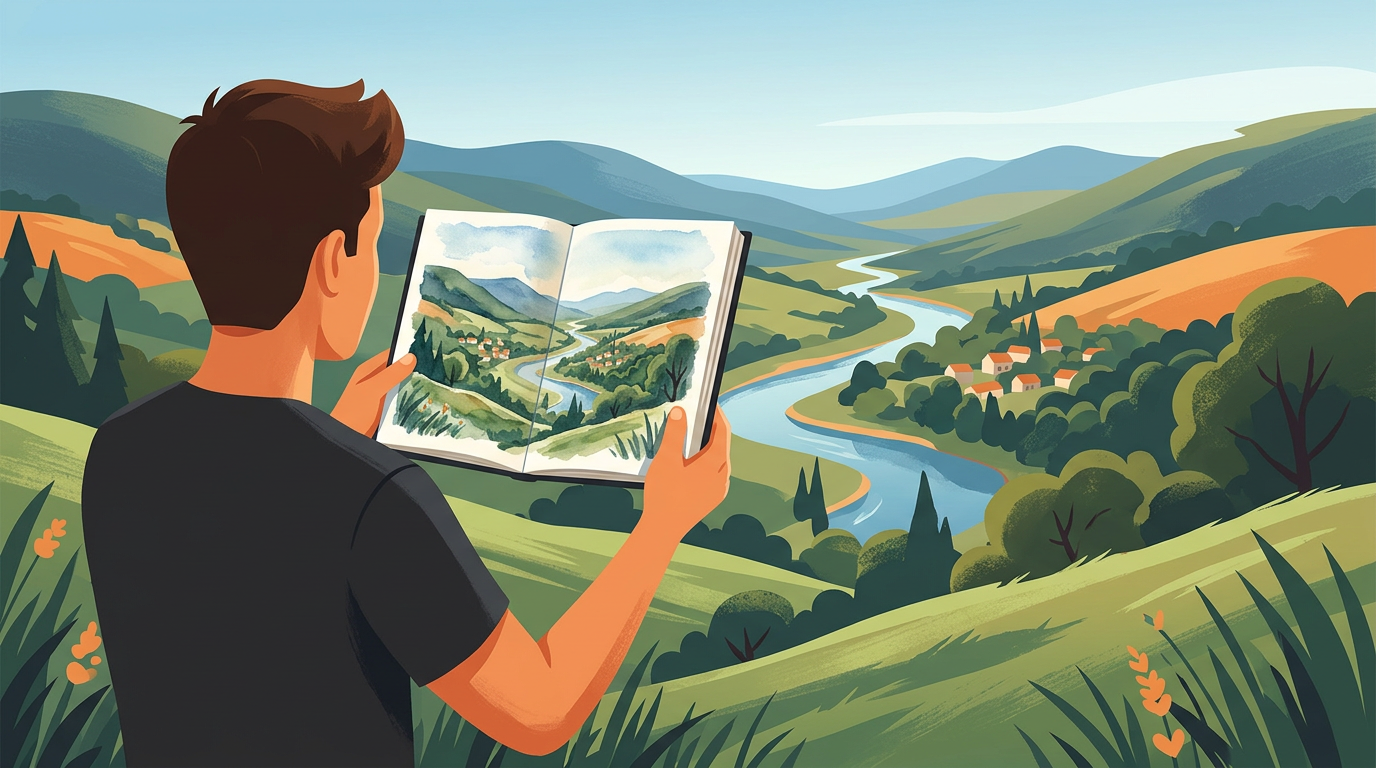
Imagine opening a family hand-me-down box. You might expect a stack of faded photo albums, a dusty casserole dish, or a ring of mystery keys that don't fit anything. Anchorage artist and filmmaker Max Romey hit the ultimate creative jackpot: 103 Strathmore sketchbooks packed with roughly 6,000 watercolor paintings left behind by his late grandmother, Lucretia 'Lu' Romey.
The catch? Almost none of them are labeled.
Lu was an adventurous artist who painted her way across Alaska, Antarctica, France, Norway, and far beyond. For Max, her sketchbooks were far more than beautiful artwork—they were a deeply personal lifeline. As a child navigating a dyslexia diagnosis, Max found his own creative outlet in painting, inspired by the hand-drawn penguin postcards his grandmother mailed him straight from Antarctica. Over a decade after she passed away, inheriting her vast collection sparked an audacious dream: track down the exact spot of every single drawing, travel there, and repaint the landscape himself.
A Mystery Wrapped in Watercolor
Launching his project, My Grandmother’s Sketchbook, Max set off carrying the exact same brand of Strathmore sketchbooks his grandmother preferred. But finding a random mountain ridge or an unmarked bend in a river painted forty years ago isn't exactly a walk in the park.
That’s where internet detectives come in. Max leverages social media crowdsourcing to help crack the geographical codes hidden in Lu's art. A follower might recognize a specific cliffside in Norway, while another identifies a hidden valley in France. It’s like an ultra-wholesome, high-stakes game of global GeoGuessr powered by art lovers worldwide.
The Otterly Interesting Part
When Max located the vantage point of a sketch Lu painted at Alaska's Matanuska Glacier forty years earlier, he sat down in the exact same spot to paint it. What he captured was more than just a sweet family echo—it was a front-row seat to history. The glacier had receded dramatically over the decades, completely altering the terrain. His side-by-side paintings ended up creating a striking visual timeline of environmental change, showing how artwork can preserve moments in time that nature eventually shifts.
The Ultimate Multi-Generational Sprint
So how’s the progress going? By mid-2025 to 2026, Max had matched and repainted roughly 20 out of the 6,000 locations. A bit of casual napkin math suggests the whole effort could take somewhere around 350 years to finish! But for Max, beating the clock isn't really the point. Every journey honors his grandmother's legacy, one landscape at a time.
If you could step into the exact footprint where your grandparents stood decades ago, where would you want to go?
Keep exploring
- How a Squad of Retired Mac Minis Cosplayed Their Way to Supercomputer Fame
- That Time the Australian Military Took On 20,000 Emus and Came Out Second Best
- Why SoCal Squirrels Are Pancake-Flat This Summer (And Why You Should Be Too)
- Take an Otter quiz
What's your take?
Join the conversation
Kind, funny and useful takes only — that's the otter way.
Loading comments…