A Gardener Turned Amazon Shipping Boxes Into a Patio Potato Patch
Before you break down that pile of delivery boxes by the front door, consider this: they might actually be your next potato patch.
We’ve all got that designated corner of the house. You know the one—the overflowing mountain of cardboard delivery boxes waiting to be collapsed and hauled to the recycling bin. But before you banish your latest shipping containers to the curb, a gardener named James Prigioni just proved those humble brown boxes might actually be the easiest, cheapest garden beds you’ll ever own.
To show that growing your own food doesn't require high-end raised beds or a sprawling backyard, James launched a brilliantly low-tech experiment right on his patio using nothing more than two standard Amazon shipping boxes.
Leaves, Soil, and a Couple of Boxes
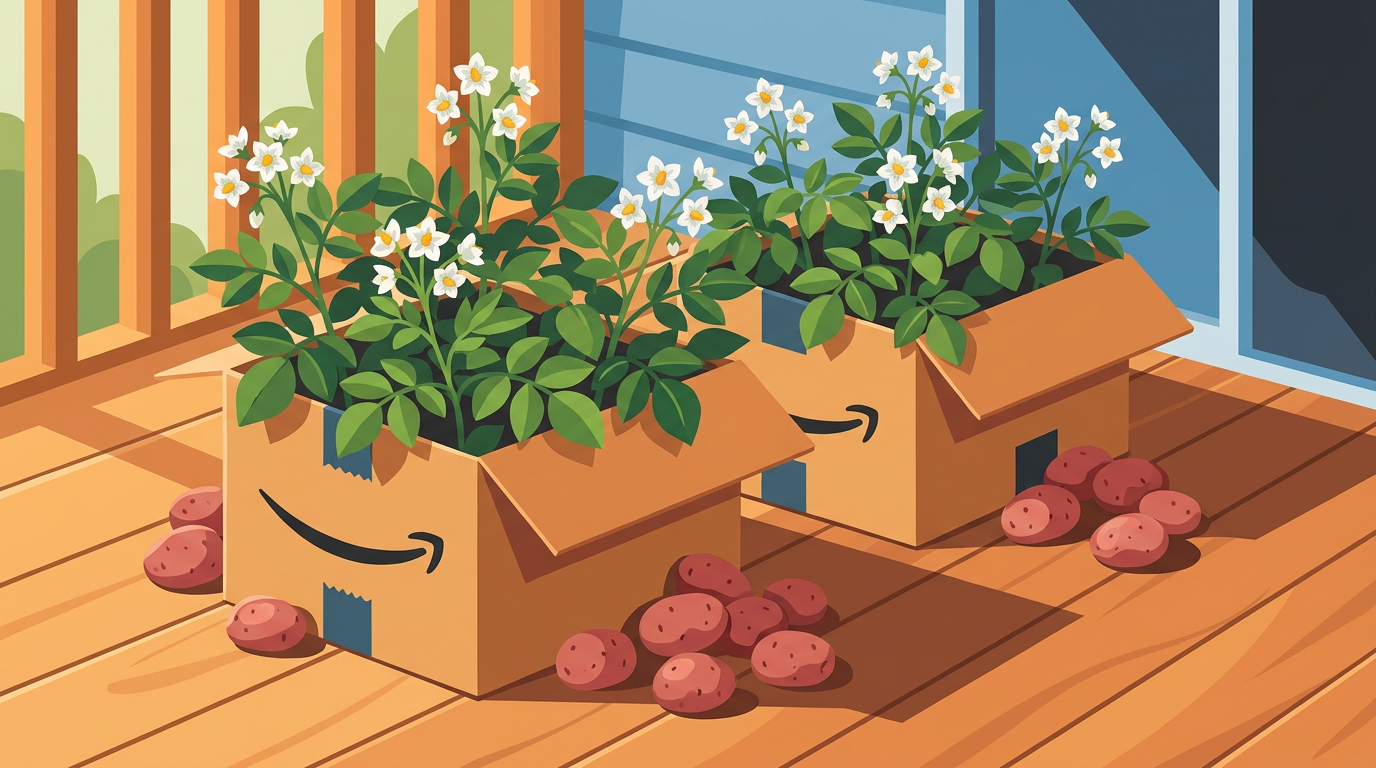
The setup was beautifully simple. James took two single-walled cardboard boxes—one slightly larger, one smaller—and prepped them for planting. To help retain soil moisture without soaking through the bottom instantly, he lined the base of each box with a layer of dried fallen leaves.
Next came four to five inches of his favorite soil mix. In the larger shipping box, he planted three dark red seed potatoes. In the smaller box, he tucked in two white seed potatoes. No fancy drainage holes drilled into plastic tubs, no expensive wooden planters—just dirt, leaves, and cardboard resting on the patio ground.
Sprouting Faster Than Standard Delivery
If you've ever watched a plant grow, you know patience is usually required. But these box-bound spuds didn't waste any time. Just two weeks after planting, bright green shoots broke through the soil surface. Ten days after that, the boxes were overflowing with lush, full foliage.
When the plants began to flower, James knew the magic was happening beneath the surface. Flowering is the plant's visual high-five telling you that delicious tubers are actively forming down in the soil.
Interestingly, the two potato varieties handled patio life slightly differently. The white potato plants proved to be natural fortress-builders, showing impressive resistance to local garden pests. The red potato leaves suffered a few minor bug nibbles along the way, but held their ground like champs.
The Grand Unboxing
The big question, of course, was whether a humble cardboard box could survive months of watering and soil weight without turning into a soggy puddle.
The verdict? Cardboard is surprisingly tough. By harvest time, the smaller box was still completely intact. The larger box had a minor split along one corner, but it held its structure well enough to keep the crop completely safe and snug.
When James tipped over the larger box, the payoff was undeniable: dozens of fresh, vibrant red potatoes spilled out in a glorious range of sizes.
The Otterly Interesting Part
Cardboard isn't just a free container; it's actually fantastic for plant roots. Because cardboard breathes, it helps prevent soil from turning into a stagnant, waterlogged swamp while naturally insulating root systems from drastic temperature swings. Plus, as it breaks down, it simply returns to the earth as organic matter. It’s essentially the ultimate zero-waste flowerpot.
Time to Check Your Front Porch
So the next time a tape-sealed package lands on your doorstep, maybe hold onto it for a weekend project. With a handful of leaves and a couple of spuds, your front porch could be well on its way to producing dinner.
What’s the most unexpected thing you’ve ever used as a planter?
Keep exploring
- The Ultimate Long Game: Buying the Mystery House You Crushed On at 15
- Why Gen X and Boomer Women Are Trading Solitude for the Ultimate 'Golden Girls' Roommate Pact
- Pamela Anderson Is Letting Wild Vegetables Rule Her Garden—and Feeding Her Whole Town
- Take an Otter quiz
Otterly agree? Tell us why.
Join the conversation
Kind, funny and useful takes only — that's the otter way.
Loading comments…