
The Guest Who Wouldn't Leave: How Five Weeks Destroyed a Literary Friendship
When fairytale writer Hans Christian Andersen stayed with Charles Dickens for five awkward weeks, an idolized friendship went up in smoke.
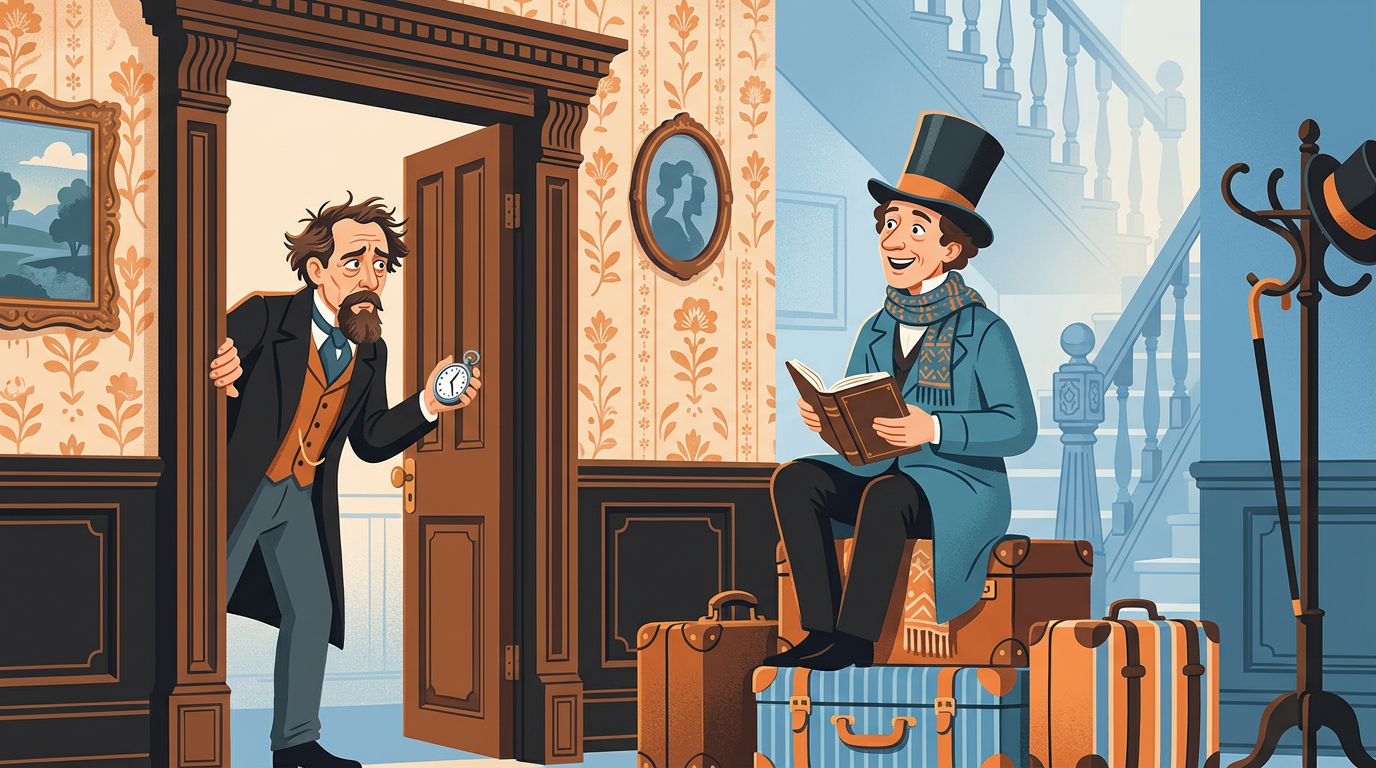
We have all had that one friend who just cannot read the room. Maybe they text back instantly with three paragraphs while you reply four days later with a single word, or maybe they ask to drop by for a weekend and end up living on your couch for a month. If you have ever cringed through a social situation like that, take comfort in knowing that this exact dynamic once ruined one of the biggest literary friendships in Victorian history.
Match Made in Pen-Pal Heaven
When Danish fairytale author Hans Christian Andersen first met British literary star Charles Dickens at a London gathering in 1847, Andersen was completely starstruck. To Andersen, Dickens was not just a fellow writer; he was the absolute writing legend of the era. During their initial encounter, Andersen made no secret of his admiration, warmly declaring Dickens to be the greatest author of their time. Dickens was equally gracious, following up their meeting by sending Andersen a thoughtful package of books and a polite note of thanks.
That initial spark launched nearly a decade of warm correspondence. But right from the start, the energy balance was a bit skewed. Andersen was the ultimate fast-replying friend, answering letters almost immediately and with unbridled passion. Dickens, by contrast, regularly took months to write back. In one particularly intense letter prior to a visit, Andersen even asked Dickens to "always save a small corner in his heart" for him—the 19th-century equivalent of sending double-heart emojis after a polite "see you soon."
The Five-Week Houseguest Marathon
The ultimate test of their bond came in the summer of 1857, when Andersen traveled to England to stay at Dickens' country home. What might have been a pleasant brief stay stretched into a five-week marathon.
While Andersen was floating on air, soaking up every minute with his hero, the friction behind the scenes was growing. Language barriers did not help matters. Dickens privately poked fun at his guest in a letter to a friend, cheekily claiming that Andersen spoke only Danish—and likely did not even know that language very well.
As the weeks wore on, Andersen remained utterly oblivious to his host's mounting exhaustion, completely missing the subtle Victorian social cues that it was time to pack his bags. By the time Andersen finally departed, the damage was done. The intense pen-pal warmth cooled almost instantly, bringing a decade of eager letters to a quiet, awkward end.
The Otterly Interesting Part
It is easy to imagine historical icons as solemn figures living in a world of pure high drama, but human nature really never changes. The story of Andersen and Dickens proves that unrequited friendship energy, mismatched communication habits, and the desperate need for personal space after five straight weeks of hosting are timeless human realities.
Know When to Wrap It Up
So, what is the big takeaway from this Victorian houseguest saga? Admiration is wonderful, but paying attention to your host's subtle boundaries is even better. Next time you visit a friend, maybe skip asking for a permanent corner of their heart and stick to a three-day maximum.
Have you ever had a houseguest who completely overstayed their welcome? How did you handle it?
Keep exploring
- How a Very Good Great Dane Accidental-Peed Her Way Into World War II History
- The Mystery of the Upside-Down Whales and the Ocean's Ultimate Maternity Ward
- Why There Are Luminous Robotic Flowers Blooming Upside Down in a Historic French Church
- Take an Otter quiz
What's your take?
Join the conversation
Kind, funny and useful takes only — that's the otter way.
Loading comments…