
Before 1977, Nobody Knew What to Do With Their Hands When Something Good Happened
Human civilization went thousands of years without high-fiving—until an impromptu baseball celebration changed how we celebrate forever.
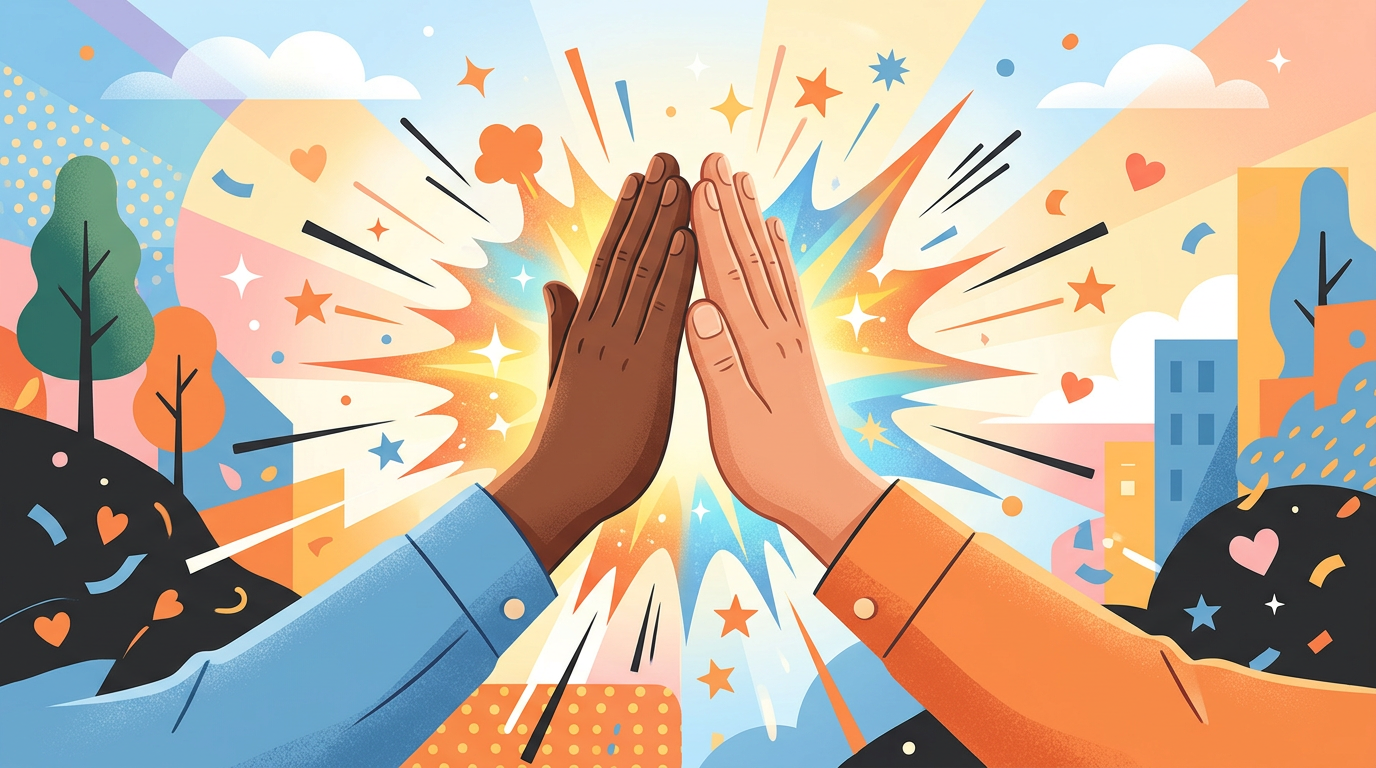
Have you ever paused mid-celebration and wondered what people used to do when great things happened before modern times? Did medieval knights awkwardly shake hands after winning a tournament? Did ancient architects give each other polite nods after finishing a pyramid? For almost all of human history, when something amazing occurred, we were surprisingly short on snappy ways to share physical joy.
Enter the high five: a gesture where two people raise one hand each and slap open palms together roughly at head height. It feels like an ancient human instinct, as natural as laughing or smiling. But the high five as we know it is surprisingly young—in fact, it isn't even fifty years old.
Long Before Hands Went High, They Stayed Low
While the high five itself is a relatively recent invention, its groundwork was laid decades earlier. Long before anyone was slapping palms above their shoulders, people were connecting down low.
The "low five" had been a staple of African American culture and jazz circles since at least the 1920s. It was smooth, stylish, and relaxed. You held out your hand palm-up at waist level, and your friend gave it a cool, gentle slap. It was a subtle nod of solidarity and shared rhythm that fit perfectly with the jazz age spirit.
For half a century, hand celebrations stayed down low. But on one bright October afternoon in 1977, everything shifted upward.
October 2, 1977: The Moment of Palm Contact
It was the final day of the Major League Baseball regular season. Dusty Baker, an outfielder for the Los Angeles Dodgers, had just hit his 30th home run of the year—a massive milestone for the team. As Baker rounded home plate, his teammate Glenn Burke stepped up to celebrate.
Burke didn't offer a low five, nor did he reach out for a standard handshake. Caught up in the sheer excitement of the crowd, Burke threw his arm high into the air, palm open and wide. Baker looked up, wasn't entirely sure what was happening, but went with his gut: he reached up and slapped Burke's hand.
That loud, spontaneous slap reverberated far beyond the stadium. Without realizing it, Burke and Baker had just executed the first widely documented high five in history.
From the Diamond to the Entire Planet
The gesture caught fire fast. During the 1978–1979 college basketball season, players on the University of Louisville team picked up on variations of the high five, bringing the explosive move to national television. Millions of viewers watched players leaping into the air to slap hands, and instantly, everyone wanted in on the action.
Within a few short years, the gesture migrated out of professional sports and straight into everyday global culture. Suddenly, kids on playgrounds, co-workers closing deals, and friends meeting up for lunch were all slapping palms at head height. It became the universal signal for "we just did something great."
Separating the Facts from the Folklore
Because the high five feels so natural, people have tried to invent grander origins for it over the years. You might hear tall tales about World War II aviators using high-altitude hand slaps to signal safe landings, or claims that ancient Roman gladiators slapped open palms in the arena.
While those stories make for fun movie scenes, they are pure folklore with zero historical evidence. The truth is much funnier: humanity really did manage to build empires, sail oceans, and invent the printing press without ever hitting a high five.
The Otterly Interesting Part
What makes the high five so fascinating isn't just its history—it's the weird physics of human connection behind it. Unlike a self-congratulatory fist pump or an isolated cheer, a high five is an absolute contract of trust. Both people have to commit, judge distance, track an incoming hand, and strike with matched force.
And here is a pro tip you might already know: if you want to avoid the dreaded, embarrassing wrist-miss, don't look at the incoming hand. Look directly at the other person's elbow. You will hit a crisp, booming high five every single time.
The Shared Joy of the Open Palm
Looking back, it is astounding how quickly a spontaneous gesture on a baseball field became an indispensable piece of human interaction. It proves that sometimes the best traditions aren't ancient at all—they're just simple, joyous ideas that caught on because they felt right.
So the next time you land a perfect high five with a friend, give a quick nod to 1977. What is your favorite obscure everyday habit with a weird story behind it?
Keep exploring
- The Island Raccoons Who Learned How to Paper-Mâché Their Own Toys
- This Deep-Sea Crab Doesn't Leave Home Without Its Living Anemone Backpack
- Sea Otters Bashing Shellfish Is the Aggressively Cute Masterclass You Need Today
- Take an Otter quiz
Join the conversation
Join the conversation
Kind, funny and useful takes only — that's the otter way.
Loading comments…