
How Passive-Aggressive Kitchen Drama Birthed Humanity's Favorite Snack
Next time you crunch into a bag of potato chips, thank an overworked 19th-century chef who just wanted to ruin a picky customer's day.
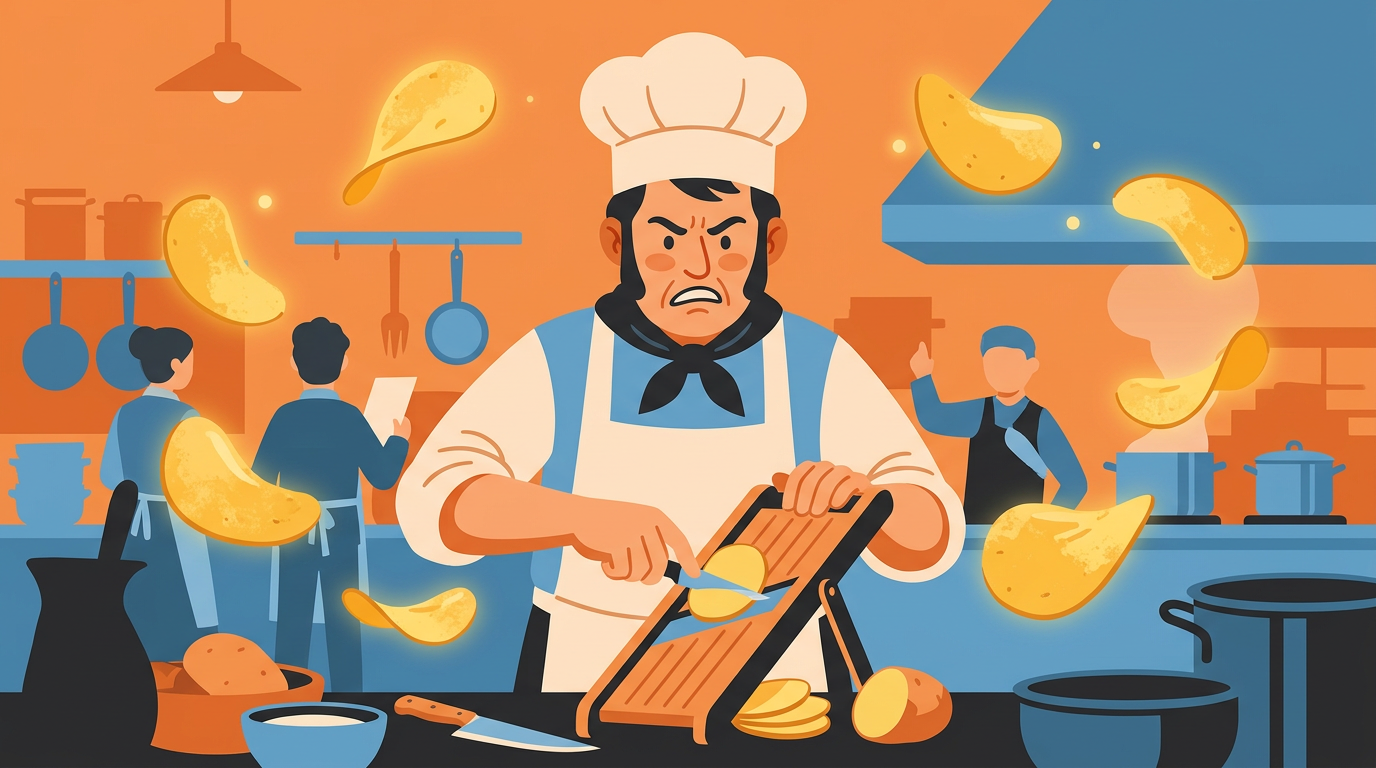
Picture this: you are working in a fancy resort restaurant, sweating over a hot stove, and a customer keeps sending their food back. We have all felt that sudden urge to embrace pure, unadulterated petty revenge. But back in 1853, one chef's passive-aggressive attempt to ruin a patron's dinner didn't end in a firing—it accidentally birthed a global snack empire.
The Soggy Potato Standoff
George Crum was a skilled chef working at Moon's Lake House, a high-end resort in Saratoga Springs, New York. At the time, french fries were thick-cut, elegant items eaten with a fork by wealthy vacationers. On one fateful evening, a particularly difficult diner sent his potatoes back to the kitchen, complaining that they were far too thick, soggy, and completely unseasoned.
Chef Crum was not amused. Instead of politely remaking the dish, he decided to engage in a masterclass of malicious compliance. He grabbed a potato, shaved it into impossibly thin slices—so thin you could practically see through them—and tossed them into boiling hot oil until they were fried to a brittle, snap-in-your-fingers crisp. To finish off his culinary insult, he drenched them in salt, handed the plate to the waiter, and waited for the customer's outrage.
From Culinary Spite to Fine Dining
Except... the plan backfired spectacularly. The picky customer loved them. In fact, everyone at the table wanted a taste. Other diners began demanding their own plates of the paper-thin fried spuds, and suddenly, Crum's "revenge potatoes" became the hottest luxury dish on the menu, known far and wide as Saratoga Chips.
Now, if you have heard the popular story that the complaining customer was legendary railroad tycoon Cornelius Vanderbilt, take that with a grain of salt—historians note that part is likely just delicious kitchen gossip. Furthermore, thin-fried potato recipes had made quiet appearances in earlier nineteenth-century cookbooks. But Crum was the chef who elevated the crisp to legendary status through pure, high-stakes kitchen drama.
Long before potato chips were sold in foil bags at gas stations, they were served as high-end delicacies on fine china with linen napkins.
The Otterly Interesting Part
Is there anything more delightfully human than creating something wonderful out of sheer irritation? While many great breakthroughs come from brilliant scientific research, a surprising number of life's best simple pleasures—like the potato chip—were created simply because someone said, "Oh yeah? Watch this."
A Satisfyingly Salty Legacy
It took several decades for mass-production techniques and wax-paper bags to turn Saratoga Chips into the casual pantry staple we devour on movie nights today. But the core recipe remains exactly as Crum intended: potatoes, piping hot oil, salt, and the sweet, lingering spirit of petty victory.
So the next time you reach for a handful of salty chips, give a quiet nod to Chef Crum and the art of malicious compliance. What is your favorite everyday food with a weird origin story?
Keep exploring
- Forget Silence in the Stacks: This New Library Lets You Borrow Tents, Hammocks, and Mud
- Goldfish Cookie
- Honey Halloumi
- Take an Otter quiz
Otterly agree? Tell us why.
Join the conversation
Kind, funny and useful takes only — that's the otter way.
Loading comments…