6 Slang Terms from Jane Austen’s England That Aged Shockingly Well
Long before texting, Regency Brits were using sly phrases and casual banter to roast their friends—and Jane Austen preserved it all for us.
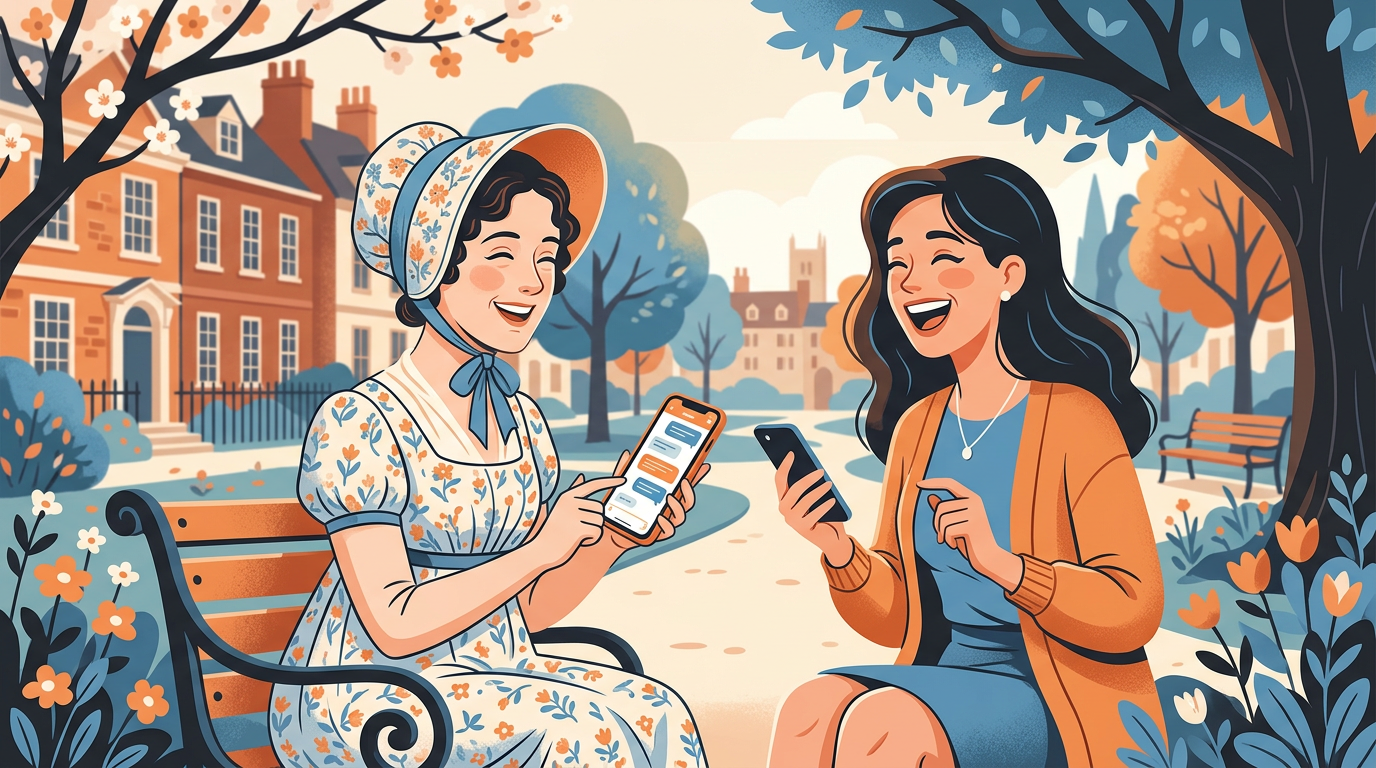
If you picture Georgian England as a bunch of overly stiff aristocrats standing in drawing rooms exchanging robotic pleasantries, we have some glorious news for you. People back then were just as dramatic, chaotic, and obsessed with casual banter as we are today.
During the Georgian era—which spanned from 1714 to 1837—everyday language was evolving rapidly. And nobody captured the hyper-specific, slightly snarky tone of the era quite like Jane Austen. Writing her six major published novels between 1811 and 1817 (after starting her writing career at just 19 years old), Austen was essentially the ultimate observer of social culture. While she didn't single-handedly invent all our favorite turns of phrase, her books served as early time capsules for terms we still drop into conversation today.
Here are six phrases and slang terms straight out of Austen's world that have survived over two centuries without missing a beat.
## 1. "Dressing a Salad"
In Pride and Prejudice (which Austen originally drafted back in 1796), casual social hangouts among young adults look surprisingly familiar. In one scene, Lydia Bennet casually mentions making a cucumber salad as part of a afternoon spent eating cold meat, lingering near hat shops, and keeping an eye out for handsome soldiers. The phrasing used in the text—"dressing a sallad"—refers to prepping greens, but the context shows that tossing a salad while hanging out with friends was the 1790s equivalent of grabbing iced coffees and going for a gossip walk.
## 2. "Out of Spirits"
When someone in an Austen novel is feeling down, overwhelmed, or generally bummed out, they aren't described in dense medical jargon. They are simply "out of spirits." It was the Regency version of saying your battery is at 1% or that you're just not feeling it today. The phrase was a gentle, relatable way to excuse yourself from a crowded ballroom without having to explain your whole emotional life.
## 3. "Taking a Turn"
When tension got high in a 19th-century parlor, characters didn't just stand there staring at each other. They would step up and "take a turn around the room." Today, telling someone you need to take a lap or walk it off serves the exact same purpose: stepping away for two minutes so you don't say something you'll regret.
## 4. "Smart" (Meaning Well-Dressed)
Long before "smart" strictly meant book-smart, Georgian society used it to describe someone who looked exceptionally sharp or stylish. If a gentleman rocked up to a assembly in a tailored coat and polished boots, he was looking exceedingly smart. We still use this exact slang today when we compliment someone on a "smart outfit" or a sharp suit.
## 5. "A Nightcap"
While we usually think of a nightcap as a quick late-night drink before heading to bed, the term originally referred to the literal soft cap worn to sleep. By Austen's era, the phrase was already making its transition into conversational slang for the very last ritual of the evening. Whether liquid or fabric, the goal remained unchanged: winding down after a long night of socializing.
## 6. "Candid"
In modern English, being candid means being completely honest, open, and unfiltered. In Austen’s time, the word was just beginning to shift toward its modern usage. Characters who spoke with total openness were praised for being candid—a trait that could either make you the most refreshing person in the room or get you into absolute heaps of trouble.
## The Otterly Interesting Part
It is amazing how a single subtle gesture from this era can still speak volumes to modern audiences. In the 2005 film adaptation of Pride and Prejudice, Mr. Darcy briefly flexes his hand after helping Elizabeth into a carriage. That single, unscripted moment became an instant icon for viewers over two centuries after the book was written, proving that subtle non-verbal drama translates across centuries just as well as the slang does.
## Spill the Regency Tea
The next time you tell a friend you're feeling out of spirits or step away to take a quick lap around the block, remember that you are channeling the exact energy of a 19th-century socialite dodging an awkward conversation. Which historical phrase do you think deserves a full-blown comeback in modern group chats?
Keep exploring
- The Asteroid Didn't Just Kill the Dinosaurs—It Upgraded the Ants
- Seven Grain Heads on One Stalk? How Attic Clutter Sprouted an Agricultural Wonder
- How a Boisterous German Artist Taught a Soft-Spoken Air Force Veteran to Paint Happy Little Trees
- Take an Otter quiz
Have something to add?
Join the conversation
Kind, funny and useful takes only — that's the otter way.
Loading comments…