
London’s Quietest Neighbors Have Been Hiding a Massive Secret Since 1868
Numbers 23 and 24 Leinster Gardens look like grand Victorian homes, but behind their five-foot-thick walls lies a clever 19th-century engineering magic trick.
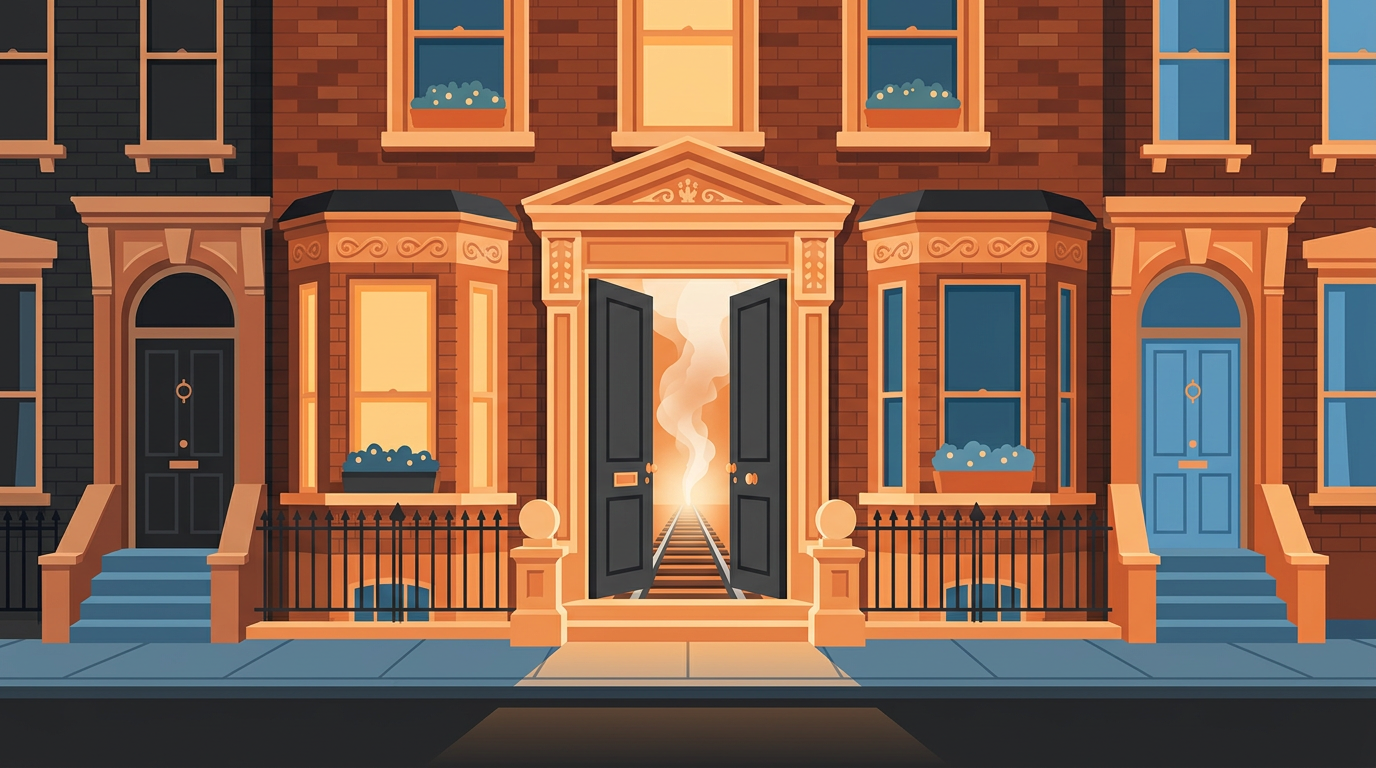
Imagine finding the absolute ideal city neighbors. They never blast loud music, they never steal your street parking, and they never leave smelly garbage bins on the sidewalk. In fact, they haven't made a single peep since 1868.
That is because numbers 23 and 24 Leinster Gardens in London are not homes at all. They are a five-foot-thick optical illusion designed to keep a major Victorian urban secret.
The Great Victorian Cover-Up
Back in the mid-19th century, London was pioneering underground rail transit with the construction of the Metropolitan Railway line. To build the tracks, engineers used what was called the "cut-and-cover" method. They literally dug a gigantic open trench straight through existing streets, laid down the tracks, and built a roof back over them.
There was just one giant, smoky problem: early underground trains ran on steam engines. If you completely seal a steam engine inside a long tunnel, you end up with a terrifying, airless chamber of coal smoke and steam. To keep passengers from suffocating, train lines required periodic open-air gaps along the route so engines could vent smoke into the open sky.
When the railway plowed right through the upscale terrace of Leinster Gardens, two gorgeous five-story townhouses had to be demolished to create an open vent gap over the tracks.
Details Fit for a Detective
Leaving a gaping, ugly hole in the middle of an affluent residential street was an architectural nightmare that local property owners were not about to tolerate. The solution was brilliant in its simplicity: build a fake front.
Constructed in 1868, the dummy facade matches the surrounding terrace architecture with astonishing detail. It spans five stories and features classical Corinthian columns, ornate stucco work, and elegant iron balconies.
If you inspect the front doors up close, however, the facade reveals its secret. The windows are painted dark gray instead of glass, and the front doors completely lack keyholes or letterboxes. Behind that five-foot-thick brick exterior, sturdy steel girders hold up the facade above a massive drop down to the open train tracks below.
The Otterly Interesting Part
Transport for London still maintains this Victorian magic trick today, concealing active tracks used by Circle and District line trains. The site is so famous for its sneaky charm that legendary author Arthur Conan Doyle used a similar false building plot twist in his Sherlock Holmes stories, and the real-life Leinster Gardens facade was later featured in the season three finale of the BBC television series Sherlock.
It turns out the Victorians were master illusionists—not with mirrors, but with five feet of brick and a whole lot of steam.
Have you ever stumbled upon a bizarre piece of hidden urban history tucked away in your own city?
Keep exploring
- Why Wombats Poop in Cubes (and Why Physics Loves Them for It)
- From Color TV to CAPTCHA: The Hispanic Inventors Who Built Your Daily Routine
- How 12,000 Tons of Orange Peels Secretly Revived a Rainforest
- Take an Otter quiz
Have something to add?
Join the conversation
Kind, funny and useful takes only — that's the otter way.
Loading comments…