
NASA’s Next Big Telescope Is Built Like the Ultimate Cosmic Road-Tripper
NASA built the Nancy Grace Roman Space Telescope with in-space refueling capabilities, making it the ultimate long-haul explorer ready for an endless cosmic highway.
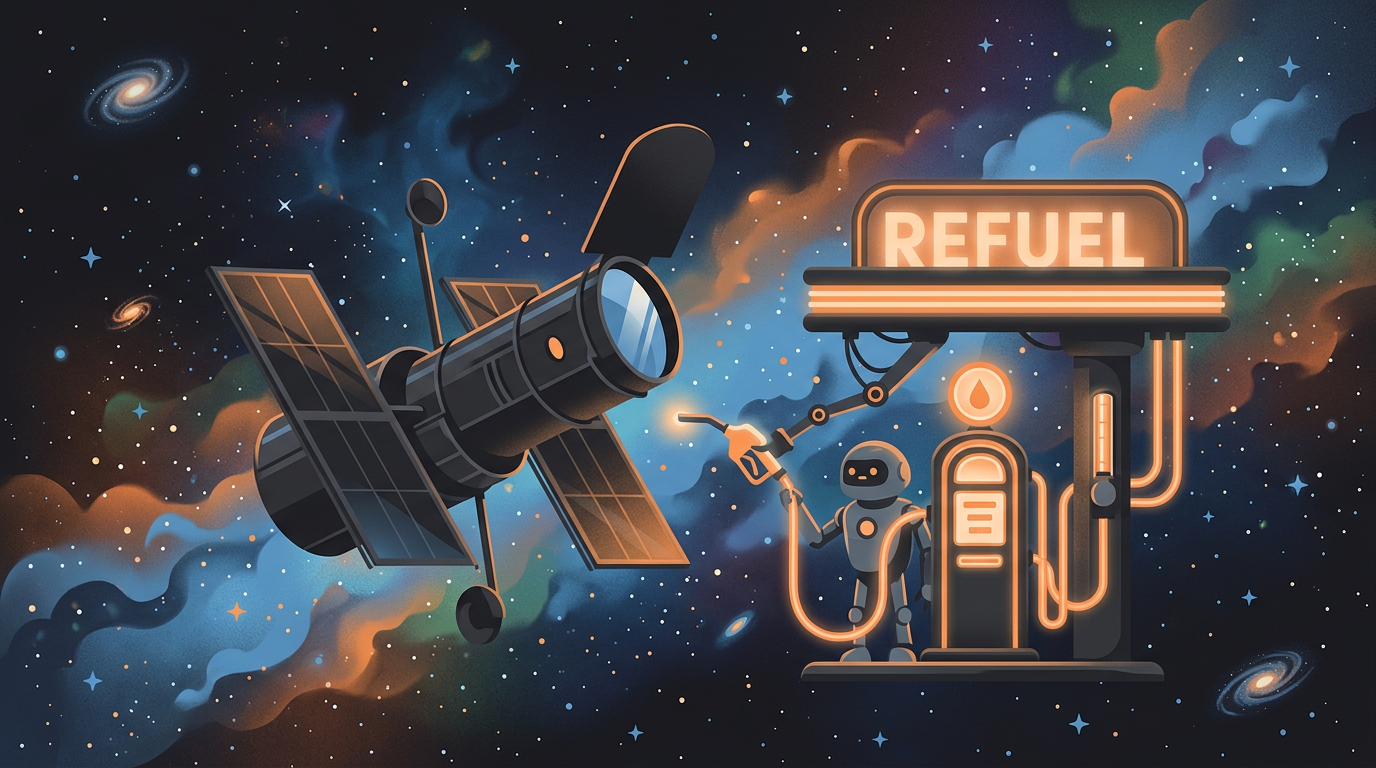
If you have ever packed a car for a weekend trip, you know the vibe. You pack three extra pairs of shoes, a box of snacks you will never touch, and enough emergency gear to survive a minor apocalypse on Interstate 95.
Well, NASA appears to have embraced that exact same energy for its next flagship eye in the sky. The Nancy Grace Roman Space Telescope is engineered with a feature that sounds straight out of a sci-fi highway movie: built-in capabilities for in-space refueling.
That makes it the very first NASA space observatory built from day one to pull up to a cosmic gas pump while remaining in orbit. Talk about being prepared for the ultimate long-haul journey.
Packing for the Cosmic Highway
Usually, when we launch a massive, highly sophisticated space telescope, it leaves Earth with a very strict shelf life. Fuel in deep space is like battery life on an old smartphone. Once the thrusters burn through their final drops of propellant, that is pretty much it. The mission wraps up, and the observatory slowly drifts out of service.
NASA engineers decided to flip that script with the Roman Space Telescope. By designing the observatory specifically to allow in-space refueling, they have given this mission a incredible cheat code for longevity. Instead of treating the spacecraft like a single-use battery, they built it like a reliable pickup truck with an accessible fuel cap.
If a robotic servicing mission rendezvous with it down the road, it can simply top off the tank, fire up the thrusters, and keep scanning the universe for dark energy, exoplanets, and cosmic mysteries without missing a beat.
The Art of the Orbital Pit Stop
Imagine driving across the country without ever having to trade in your car just because the gas tank hit empty. That is essentially what in-space refueling offers for space exploration.
Building an observatory that can accept fresh propellant mid-mission requires serious technical ingenuity. You need docking interfaces that can handle autonomous robotic arms, fuel lines that won't leak in the freezing vacuum of space, and a structural design robust enough to handle a gentle cosmic handshake thousands of miles above Earth.
It is a huge leap forward for how we think about building infrastructure in orbit. We are moving away from disposable space hardware and moving toward a era of sustainable, reusable, and extendable science missions.
The Otterly Interesting Part
There is something wonderfully reassuring about engineers designing hardware with the future in mind. By building in a refueling port before the telescope even leaves the ground, NASA is basically planting a flag for future space technology. It assumes that by the time this telescope needs a refill, we will have robotic orbital gas trucks ready to service it. That is top-tier cosmic optimism at its finest.
Ready for the Long Haul
So next time you double-check your trunk before a long drive, take comfort in knowing that NASA is doing the exact same thing on a galactic scale. The Nancy Grace Roman Space Telescope is built to stay out on the cosmic highway for as long as we can keep the tanks full—and honestly, we love a good long-distance road trip.
Keep exploring
- Agatha Christie Sold Two Billion Books—and Still Cringed at Some of Them
- Forget Smelling Salts: Why Sniffing Cocoa Could Supercharge Your Workout
- Genius Minds, Silly Traps: Why Smart Animals Make Ridiculous Mistakes
- Take an Otter quiz
Have something to add?
Join the conversation
Kind, funny and useful takes only — that's the otter way.
Loading comments…