
Why Nobel Prize Winners Owe Their Brain Light Switch to Pond Scum
Scientists won the 2026 Nobel Prize for controlling brain cells with light—all thanks to a single-celled alga looking for a good suntan.
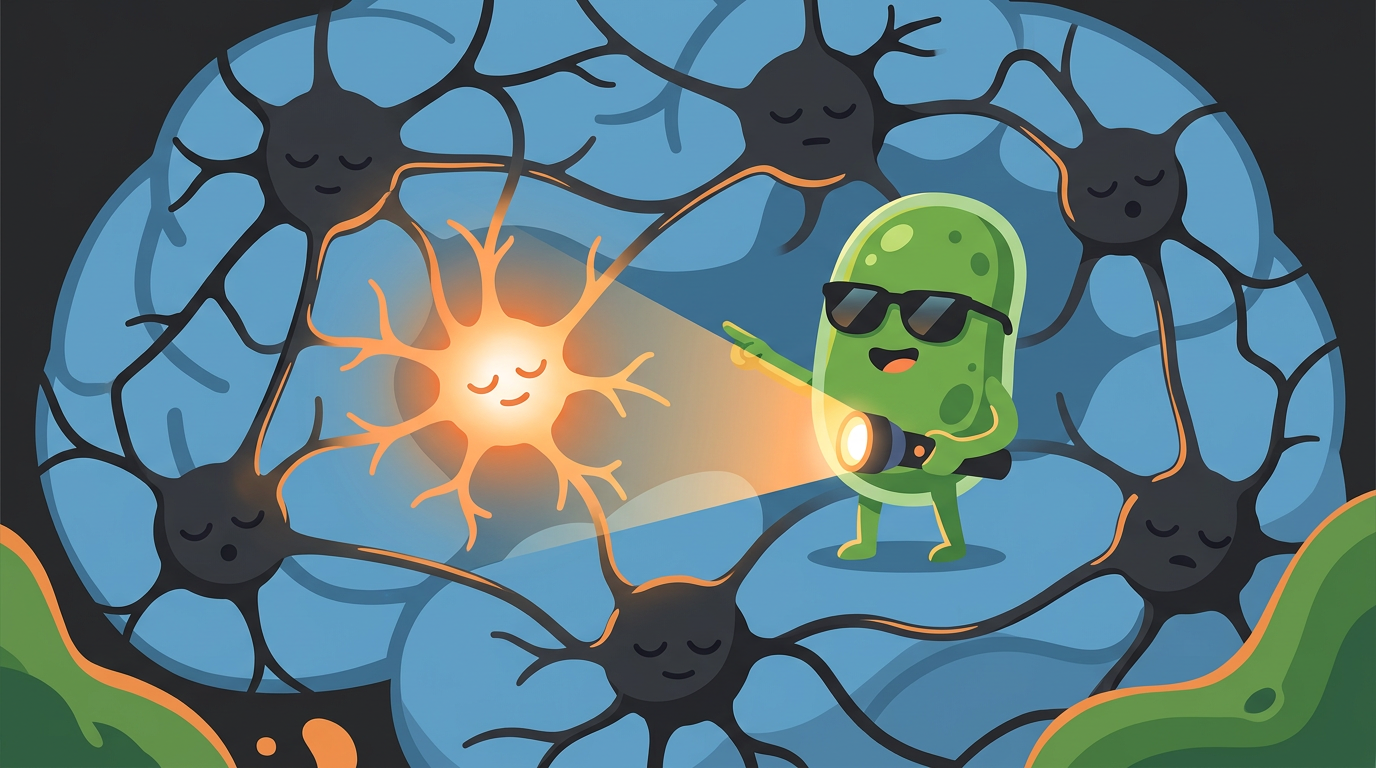
Imagine having a light switch attached to an individual neuron inside the brain. Flip it on, and that exact cell fires up; flip it off, and it goes completely quiet. It sounds like sci-fi, but it is very real—and it just won the 2026 Nobel Prize in Physiology or Medicine.
Researchers Karl Deisseroth of Stanford University, Peter Hegemann of Humboldt University of Berlin, and Georg Nagel of the University of Würzburg were awarded the prestigious prize for pioneering this revolutionary field, known as optogenetics. But here is the delightful twist: the secret key to this mind-bending breakthrough did not come from a supercomputer or an expensive synthetic material. It came from humble, single-celled pond scum.
Sunseeking Pond Scum to the Rescue
Meet Chlamydomonas, a single-celled green alga that spends its days floating in water with one primary goal: finding just the right amount of sunlight to thrive. To navigate toward light, this tiny organism relies on a specialized membrane protein called channelrhodopsin.
Inside channelrhodopsin sits an even smaller light-absorbing molecule named retinaldehyde. When a photon of light hits retinaldehyde, the molecule instantly changes its physical shape. That shape-shift acts like a tiny biological key, popping open a pore in the alga's membrane so positively charged ions can rush in and tell the cell which way to swim.
How to Remote-Control a Neuron
The Nobel-winning team realized that if light could open channels in pond algae, it could theoretically do the exact same thing in nerve cells.
To pull off this cellular magic trick, researchers use modified, non-pathogenic viruses as gentle delivery drivers. These microscopic vehicles carry the gene for channelrhodopsin directly into target neurons. Once the brain cells build the algal protein, scientists shine precise beams of light through razor-thin optical fibers.
When the light hits, channelrhodopsin opens up wide. Positively charged ions, like sodium, flood straight into the neuron, instantly activating it on demand.
The Otterly Interesting Part
What makes optogenetics absolute wizardry is its unbelievable precision. The brain is an intensely crowded neighborhood with billions of cells packed tightly together. Traditional electronic stimulation is a bit like trying to play a single key on a piano while wearing giant foam finger mitts—you end up hitting everything nearby.
With optogenetics, light targeting is so insanely specific that a neuron equipped with the algal protein will fire, while its next-door neighbor without the protein remains completely undisturbed. It is like whispering to a single person in a packed stadium and having only them hear you.
A Bright Future Built on Pond Algae
It is genuinely wild to think that our deepest technological insights into the brain owe a massive debt to a simple microscopic organism trying to catch some rays. The next time you see a green patch on a quiet pond, give it a subtle nod. You are looking at the unexpected superstar of modern neuroscience.
Keep exploring
- Space Just Dropped a Green Star, and Our Cosmic Decor Will Never Be the Same
- This Tiny Pup Just Dropped the Most Niche Halloween Costume of the Year
- The World's First Minecraft Hotel Is Opening Near London (Start Hoarding Emeralds Now)
- Take an Otter quiz
What's your take?
Join the conversation
Kind, funny and useful takes only — that's the otter way.
Loading comments…