How 12,000 Tons of Orange Peels Secretly Revived a Rainforest
When ecologists unloaded 1,000 truckloads of citrus waste onto barren soil, nature pulled off the ultimate comeback story.
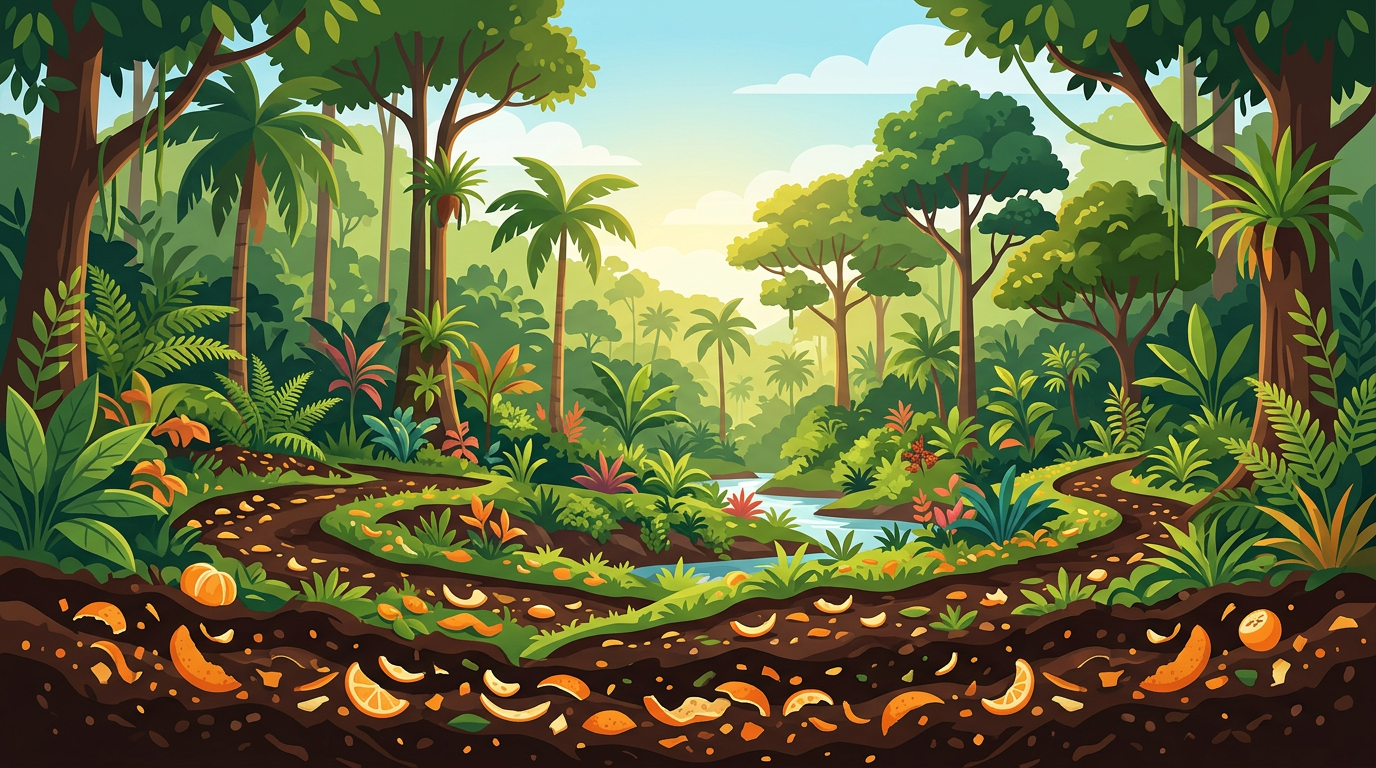
Imagine dumping 12,000 metric tons of sticky, leftover citrus scraps right onto a dry, degraded pasture and walking away. It sounds less like a groundbreaking conservation project and more like a colossal agricultural prank. But back in 1997, two visionary ecologists pitched this exact wild idea to a Costa Rican orange juice company named Del Oro.
The deal was brilliantly simple: the juice manufacturer got a free, environmentally conscious way to dispose of their leftover pulp, and the degraded land in the Área de Conservación Guanacaste got a massive injection of organic matter. Over the course of a year, roughly 1,000 heavy-duty truckloads of sticky orange waste were tipped onto a yellowed, overworked patch of former pasture.
Then came the drama.
The Great Citrus Halt
Before the project could fully stretch its roots, a rival juice producer named TicoFruit filed a lawsuit against the operation. The Costa Rican Supreme Court ultimately sided with the legal challenge, ordering the experiment to shut down after just two years.
The site was promptly fenced off, abandoned, and largely forgotten by the public. For years, the massive heap of citrus scraps sat in complete silence under the tropical sun.
Fast forward sixteen years. A team of researchers from Princeton University decided to trek back into the area to see what had actually happened to the sticky graveyard of citrus.
What they found was so radically transformed that they literally could not locate the site at first.
Lost in the Jungle
The original experiment location had been marked with a massive, bright yellow sign designed to be easily spotted from afar. But when the scientific team arrived, the sign was nowhere to be seen. The degraded soil hadn't just recovered—it had exploded into a dense, towering canopy. The jungle had grown so thick that it swallowed the giant marker whole.
When the researchers finally pushed through the tangled brush, the numbers blew them away. Compared to the adjacent pastureland—which remained choked by a single dominant invasive grass—the orange peel dump site boasted a staggering 176 percent increase in aboveground biomass. Where there had once been depleted dirt, the team cataloged two dozen distinct vegetation species flourishing in soil that was now rich, dark, and brimming with nutrients.
It turned out that as the citrus peels rotted, they smothered the invasive pasture grass, enriched the soil with vital nutrients, and invited back local bugs, birds, and seeds.
The Otterly Interesting Part
Nature didn't just rebuild the forest here; it threw an absolute block party. During their survey, researchers spotted a three-foot-wide fig tree towering over the lot, along with a thriving population of tayras—curious, dog-sized wild weasels that clearly appreciated the new real estate. It turns out that a mountain of discarded fruit pulp was basically the ultimate tropical reboot button.
A Lesson in Let-It-Be Restoration
This accidental jungle miracle proves something incredible about our planet: nature is remarkably resilient when given a jumpstart and a little space. Sometimes the best ecosystem restoration strategy isn't a hyper-engineered master plan—it’s just a mountain of nutrient-dense organic waste and a couple of decades of total, uninterrupted peace.
Would you have guessed that sticky orange scraps could build a rainforest?
Keep exploring
- Scientists Put a 125-Million-Year-Old Crocodile Under a Blacklight and Found Its Secret Striped Wardrobe
- NASA’s Next Big Telescope Is Built Like the Ultimate Cosmic Road-Tripper
- Agatha Christie Sold Two Billion Books—and Still Cringed at Some of Them
- Take an Otter quiz
Have something to add?
Join the conversation
Kind, funny and useful takes only — that's the otter way.
Loading comments…