
Next Time Someone Steals Your Idea, Thank an 18th-Century Playwright
Long before your coworker passed off your presentation deck as their own, an 18th-century London dramatist had his actual thunder stolen. Literally.
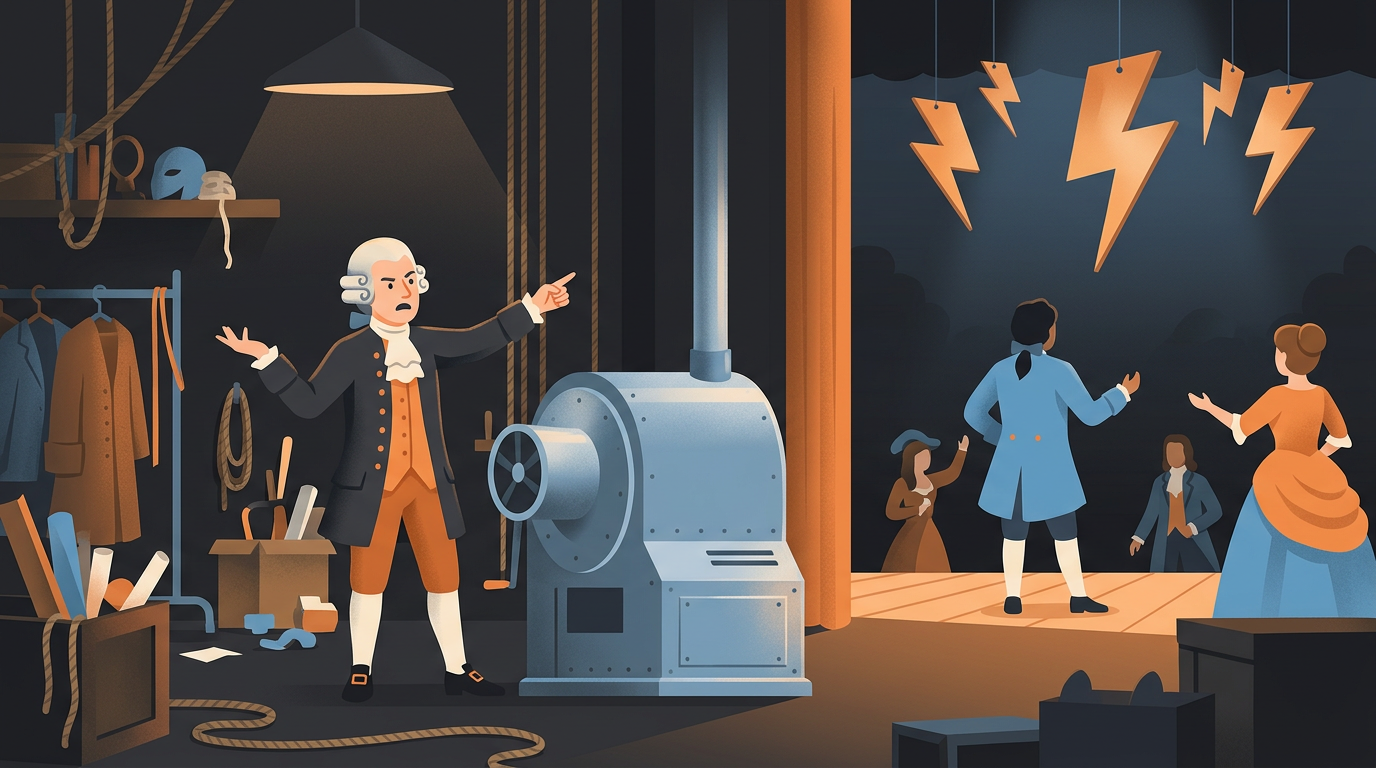
We have all been there. You drop a brilliant suggestion in a morning meeting, get met with total silence, and five minutes later a coworker repeats it louder and gets a round of applause. They just stole your thunder.
While the phrase feels like a poetic metaphor about storm clouds or Greek gods, its true origin is far more grounded—and delightfully petty. It was born out of pure, unadulterated 18th-century theatrical drama.
A Playwright with a Vision (and a Noise Machine)
Back in 1709, an English playwright and critic named John Dennis was gearing up to launch his brand-new tragedy, Appius and Virginia, at London’s famous Theatre Royal on Drury Lane.
Dennis wanted his production's storm scenes to sound revolutionary. Up until that point, stage thunder was far from terrifying; it was often created by simply rolling heavy balls across wooden floors. Dennis wanted something that would really shake the venue. So, he designed a brand-new sound machine.
Shaking Metal Sheets for Glory
To recreate the deep rumble of an authentic thunderstorm on stage, Dennis’s invention relied on shaking large sheets of metal. While the full operational details of his machine beyond those metal sheets remain lost to history, the effect itself was a massive triumph. The thunder sounded dramatically real.
Unfortunately for Dennis, the play itself did not quite match the roar of its audio effects. Appius and Virginia received a chilly reception from audiences and was pulled from the stage after only a brief run.
The Ultimate Stage Heist
Dennis was likely still sulking over his closed show when he visited the Theatre Royal shortly after to watch a different production. As he sat in the audience, the play’s storm scene began—and out came the unmistakable, booming sound of his very own metal-sheet thunder machine.
The theater management had quietly kept his sound effect technique and recycled it for another show without giving Dennis credit, praise, or compensation. Legend has it that Dennis was beside himself with anger, furious that the theater refused to run his play, yet had no problem running his thunder.
The Otterly Interesting Part
What makes this story so enduring is how perfectly Dennis's plight translates across three centuries. Theater tech in 1709 was essentially the tech startup scene of its era. Dennis spent the creative energy developing a better user experience for stage audio, only for corporate management to sunset his product and rebrand his favorite feature.
Thunder Thieves Beware
The next time someone swoops in to claim your hard work, remember you are walking in the noble, noisy footsteps of John Dennis. He may have lost his theatrical run, but he won a permanent spot in our everyday vocabulary.
Has anyone ever stolen your thunder in a hilariously blatant way?
Keep exploring
- Matchmaking, Jazz, and Mild Mischief: How to Host a 1926 Halloween Party
- At 47 Years Old, This Senior Sloth Just Became a Father Again—And It's Pure Joy
- Can It Run Doom? Yes, Even Your Relational Database
- Take an Otter quiz
What's your take?
Join the conversation
Kind, funny and useful takes only — that's the otter way.
Loading comments…