
Johnny Appleseed Wasn't a Barefoot Vagrant—He Was a Frontier Cider Genius
The real John Chapman didn't wander aimlessly scattering seeds. He built a lucrative land empire powered by frontier America's favorite drink.
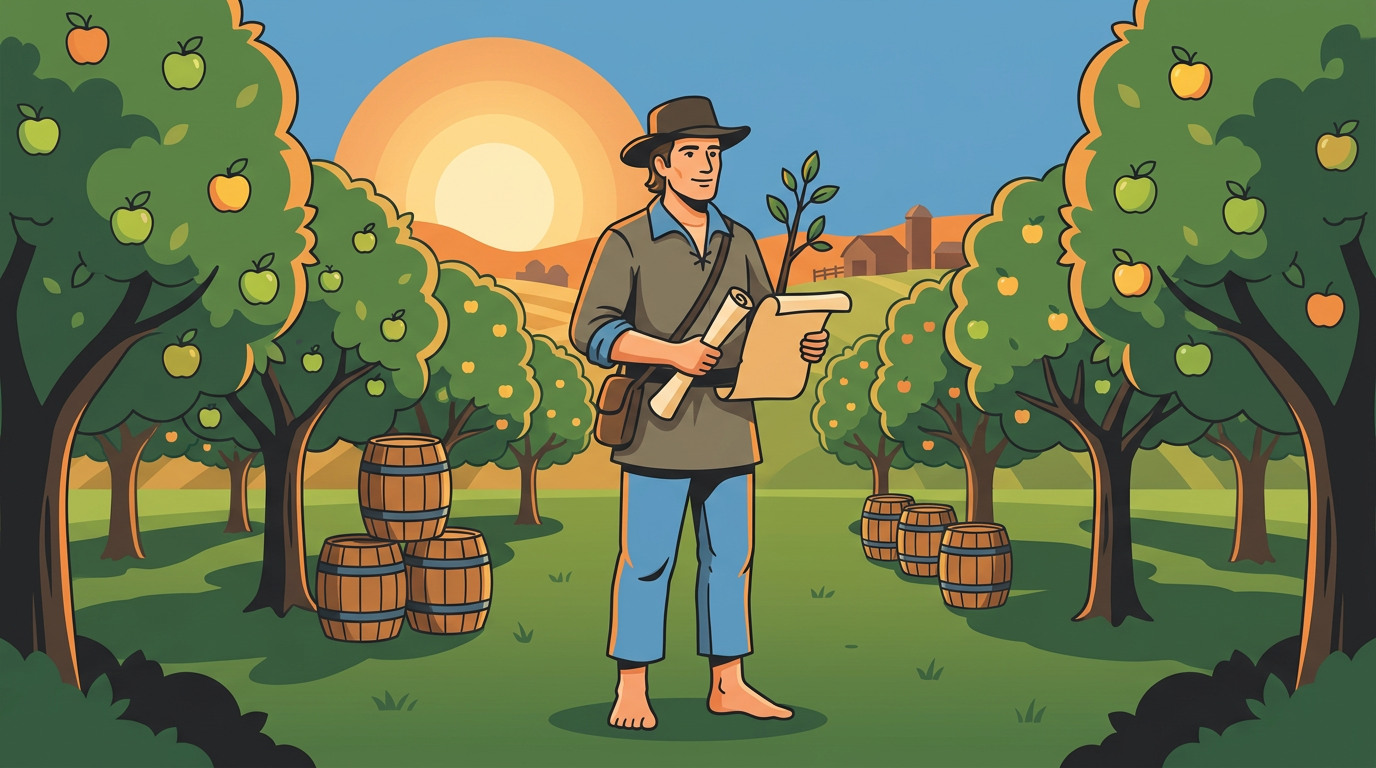
If you grew up with American folklore, you probably picture Johnny Appleseed as a eccentric, gentle drifter. You know the image: a smiling guy wandering barefoot across the wilderness, wearing a burlap sack for a shirt and a metal tin pot on his head, tossing apple seeds into the wind like magical fairy dust.
It is a charming bedtime story. It is also almost entirely wrong.
The real man behind the legend was John Chapman, and far from being a penniless vagabond, he was one of the sharpest frontier entrepreneurs of his era. He did not scatter seeds randomly; he systematically built a vast, highly profitable real estate empire across the American frontier.
From Massachusetts to the Pennsylvania Wilderness
John Chapman was born in Leominster, Massachusetts, in 1774. His childhood unfolded against the backdrop of the American Revolution, and his father served as a soldier in the Continental Army, fighting in famous early battles like Bunker Hill.
Around the age of 18, young John decided his future lay farther west. He traveled into Western Pennsylvania, which was then the rugged edge of the expanding frontier. But while other pioneers were swinging axes to build homesteads or searching for game, Chapman saw a completely different business opportunity: trees.
The Ultimate Frontier Real Estate Loophole
To understand Chapman’s genius, you have to understand how frontier land ownership worked at the time. Under early American land laws, settlers could claim parcels of wilderness, but they had to prove they were actually developing the land to finalize their deeds. One common legal requirement for proving a permanent settlement was planting a mature orchard.
Planting apple trees from seed took time, effort, and specialized knowledge—resources that fresh-off-the-wagon pioneers rarely had in abundance.
Chapman realized he could leapfrog the entire process. He would travel just ahead of the main wave of westward migration, scout out prime tracts of land near rivers, and buy or claim them. Then he would clear a patch, fence it off, and plant dense apple nurseries.
By the time incoming pioneer families arrived looking for land, Chapman was waiting for them. He wasn't giving away saplings out of pure charity; he was selling developed, turn-key orchard plots at a handsome profit. Once a nursery was established and profitable, he would leave a local caretaker in charge and move further west to do it all over again.
Why Apples? (Hint: It Wasn't for Pie)
Here is the twist that pop culture usually skips: the apples John Chapman grew were not the sweet, crisp Honeycrisps or Granny Smiths you buy at the grocery store today. Apple trees grown from seeds yield wildly unpredictable fruit, and frontier apples were usually small, sour, and unappealingly bitter.
You would not want to pack one in a lunchbox. But they were absolute perfection for one thing: fermenting into hard apple cider.
On the 19th-century frontier, clean drinking water was hard to come by, and safe well water was a luxury. Hard cider was safe, preserved well, and served as the default beverage for frontier living. By planting thousands of apple trees, Chapman wasn't stocking early American fruit stands—he was supplying the raw ingredients for the frontier's favorite adult beverage.
Wealth, War, and the Legend
Far from a impoverished wanderer, Chapman's land-flipping and nursery business made him extraordinarily wealthy during his lifetime. At the time of his death, he owned thousands of acres of valuable land across Pennsylvania, Ohio, and Indiana.
He was also a respected community figure. During the War of 1812, when hostilities flared along the border, Chapman famously trekked across dangerous territory on foot to warn isolated pioneer families of impending attacks, saving countless lives.
So how did a wealthy real estate mogul end up remembered as an eccentric vagrant wearing cookware? After his death, 19th-century writers embellished his simple, ascetic lifestyle—he did prefer modest living and deep spiritual devotion—into exaggerated tall tales. Over time, stories about his eccentricities eclipsed his formidable business acumen.
The Otterly Interesting Part
There is something delightfully ironic about American history turning a cutthroat land developer who built an alcoholic beverage supply chain into a innocent cartoon character for elementary school plays. We stripped away the hard cider and real estate deeds and left behind a guy with a pot on his head!
The next time you sip a cold hard cider or pass an apple orchard, tip your hat to John Chapman. He wasn't just planting seeds; he was quietly building the frontier, one plot at a time.
Keep exploring
- That Time the Australian Military Lost a War to Flightless Birds
- Welcome to the Jungle-Snake: Why Scientists Named a Toothy New Reptile After Slash
- The Galaxy Has a New Youngest Planet, and It Is Basically Still Swaddled in Stardust
- Take an Otter quiz
Otterly agree? Tell us why.
Join the conversation
Kind, funny and useful takes only — that's the otter way.
Loading comments…