The Physicist Who Built Robot Tutors to Teach Birds Their Ancestors' Forgotten Jams
When a city's birds lost their local vocal culture, a physicist decoded 1960s field notes and sleep-talking chatter to bring back the ultimate throwbacks.
Imagine forgetting the lyrics to your favorite song. Now imagine an entire population of local birds forgetting the unique regional anthem their ancestors sang for generations. That is essentially what happened in a bustling park in Buenos Aires. Over decades, as environments shifted and local vocal cultures faded, young songbirds lost touch with their traditional repertoire. Their history didn't vanish because the species disappeared; they simply forgot the tunes.
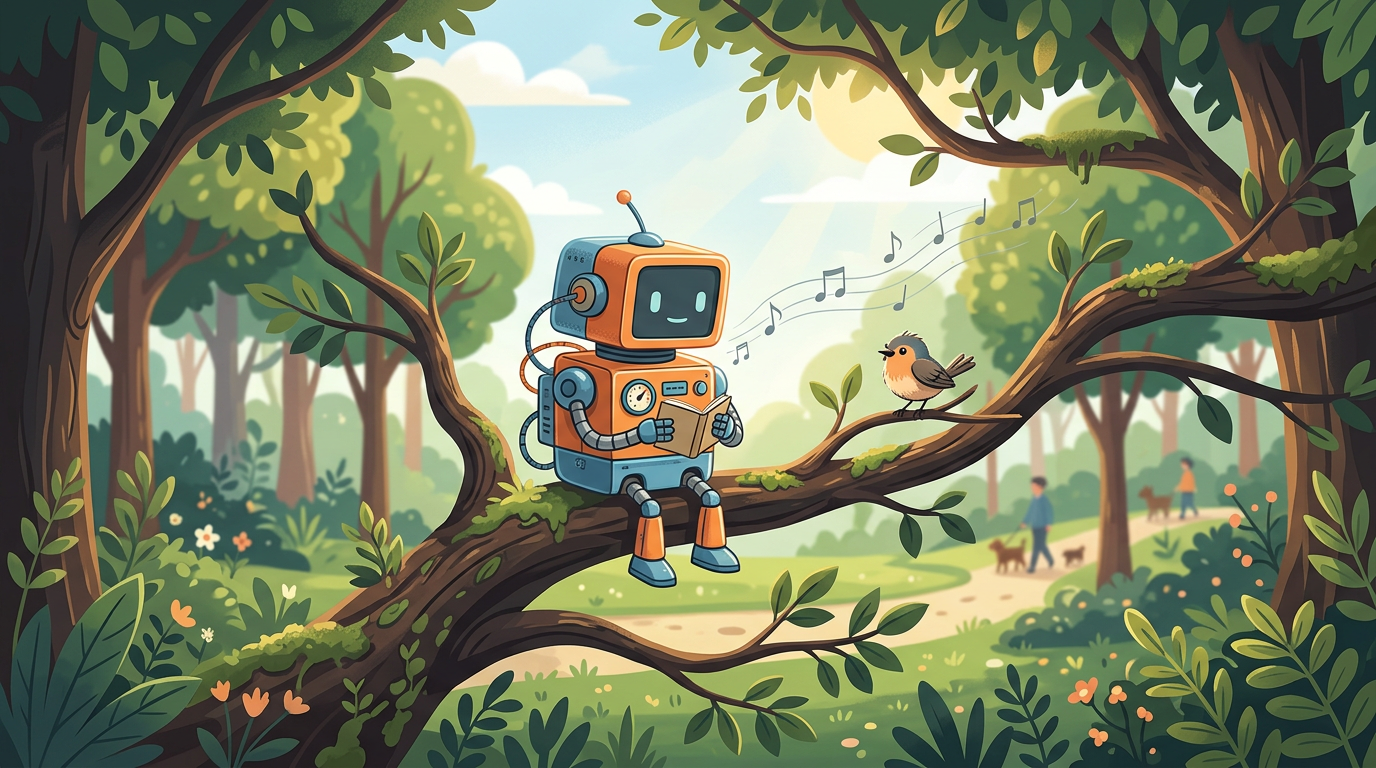
Enter Gabriel Mindlin, a physicist at the University of Buenos Aires who decided that a cultural memory loss among local wildlife called for an equally creative solution: mechanical tutors in the wild and a little bit of avian dream analysis.
Decoding Dreams and 1960s Sheet Music
How do you figure out what a bird used to sing six decades ago? You start with some old-school detective work. Mindlin dug into handwritten field notes from the 1960s, which documented the precise vocalizations of local birds from a bygone era. These vintage scribbles served as the ultimate musical blueprint for a forgotten local playlist.
But the research didn't stop with ancient notebooks. Scientists also turned to nighttime sleep patterns. It turns out that when birds sleep, their brains replay the vocal signals they practice during the day. By analyzing the subtle vocal noises birds make while dreaming, researchers gathered crucial clues about how these complex melodies were structured.
Enter the Mechanical Music Tutors
Once the lost tracks were reconstructed, the next challenge was sharing them with the next generation. You can't exactly hand a young bird a smartphone and tell them to listen to a retro playlist.
Mindlin developed robotic tutors designed to be placed directly into natural habitats. These mechanical units were deployed outdoors to deliver the long-lost melodies right to young birds, giving them a chance to hear the precise notes their ancestors once sang across the park canopy.
The Otterly Interesting Part
We often think of wildlife conservation in terms of physical protection—saving habitats, protecting nests, and boosting population numbers. But culture matters too! Many bird species learn their regional dialects much like humans learn language, passing songs down from generation to generation. When that chain breaks, an entire oral history disappears into silence. Using robotics to preserve non-human culture is like building a museum where the exhibits are alive and learning in the trees.
A New Soundtrack for the Canopy
Blending 1960s field notes, sleep science, and wild robot tutors is easily one of the most innovative ways to protect living history we've ever seen. It shows how technology and creativity can come together to help nature remember what was lost.
What forgotten tune from your own past would you hire a friendly robot to bring back?
Keep exploring
- Scientists Accidentally Invented the World's Most Expensive Deep-Sea Cat Toy
- Your Heavy Childhood Backpack Might Have Been Secret Superhero Training
- Before 1977, Celebrations Were Awkward: The True Origin of the High-Five
- Take an Otter quiz
Have something to add?
Join the conversation
Kind, funny and useful takes only — that's the otter way.
Loading comments…