
The Rogue Carpenter Who Turned a Tucson Street into a Secret Salad Bar
In 1998, a Tucson resident took a handsaw to a municipal street curb. Three years later, his confession changed how the city thought about rain.
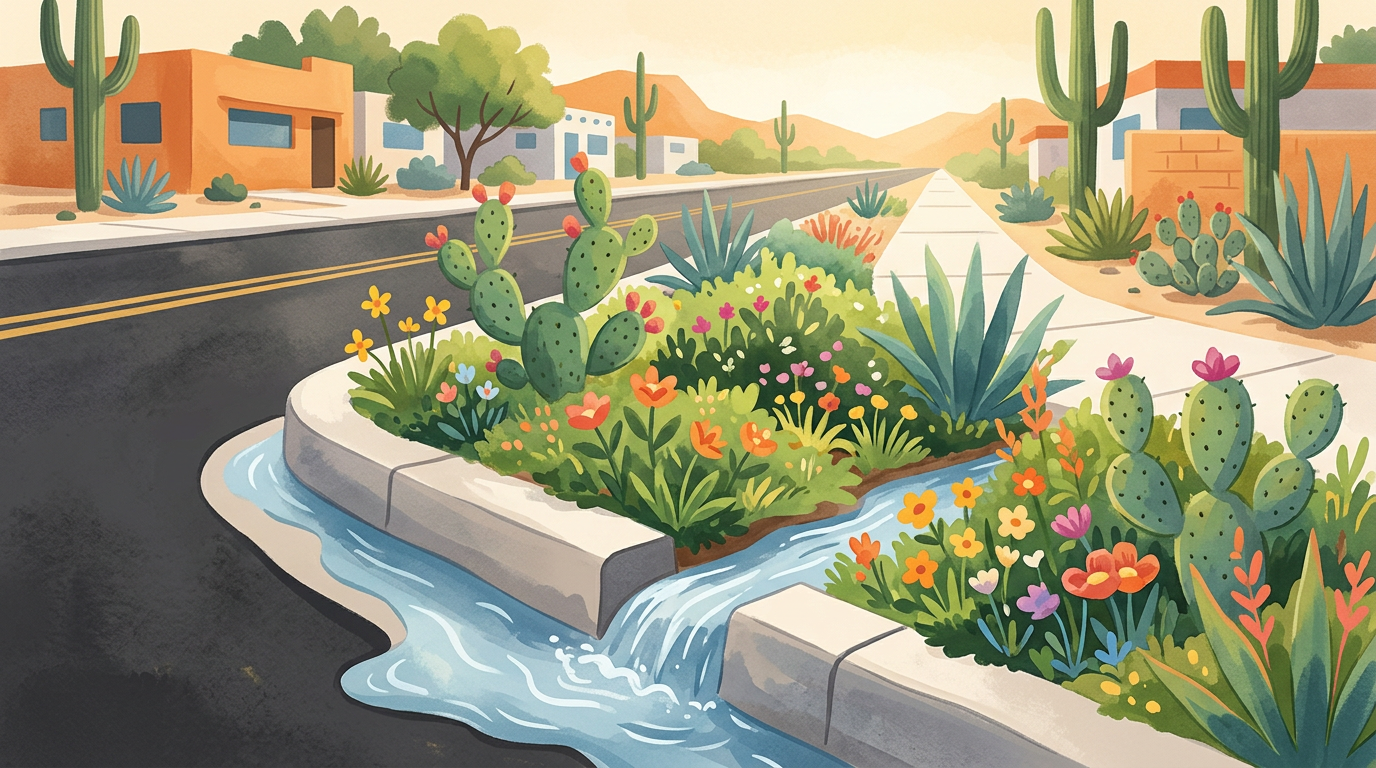
Imagine walking down your street with a handsaw, hacking chunks out of a concrete curb in broad daylight. Sounds like a villain origin story, right? But back in 1998, a man named Brad Lancaster did just that on a residential street in Tucson, Arizona—and he did it to feed a desert.
The Guerrilla Plumber of Arizona
Tucson isn't exactly known for torrential downpours. The city receives approximately 11 inches of rain each year. Because surface water is so scarce, Tucson has to source around 90 percent of its drinking water supply from the Colorado River and underground aquifers. But when rain does fall, traditional city streets act like hyper-efficient waterslides, sending precious stormwater rushing down asphalt and straight into storm drains where plants can't touch it.
Brad looked at all that wasted water, looked at a standard handsaw, and made a decision: the curb had to yield.
A Secret Salad Bar on the Sidewalk
In 1998, Brad cut six unauthorized openings directly into the municipal street curb outside his property. His goal was simple: redirect heavy street runoff into sunken soil basins planted along the sidewalk.
Instead of letting the rain hurry off into underground drains, his guerrilla plumbing caught the water and gave it time to soak deep into the soil. Then came the real magic. With all that captured moisture, the roadside basins sprouted into a thriving ecosystem packed with native and food-producing flora. Before long, his little strip of sidewalk was yielding edible flowers, rich cactus fruit, and seeds perfect for tossing into a lunchtime salad.
The wild part? City officials had no idea. Brad's unauthorized curb modifications sat right there in plain sight, doing their job quietly for three whole years without anyone in city hall noticing.
Rediscovering Ancient Wisdom
While sawing up municipal concrete without a permit was technically illegal, the core idea behind it was far from brand new. Long before asphalt grids existed, Indigenous desert communities used clever earthworks and canal networks for rainwater diversion to nourish crops in dry landscapes. Brad was essentially bringing that ancient, common-sense water logic to a modern city street.
After three years of secret success, Brad decided it was time to step into the light. He turned himself in to city officials to show them what his illegal curb-cutting had achieved. Instead of writing him a fine, city leaders took a look at the lush, food-bearing landscape he created. Seeing the undeniable proof in front of them, the city eventually updated its stance, prompting changes to local water laws to support rainwater harvesting.
The Otterly Interesting Part
It is fascinating how modern urban design so often treats rainwater like an unwanted intruder that needs to be evicted as quickly as possible. We spend massive resources building drains to push water away, only to turn around and pump millions of gallons back in to keep our landscaping green. Sometimes all it takes to break a wasteful cycle is one smart person with a saw and a fresh perspective.
A Little Food for Thought
Next time you see a sudden downpour washing down your street, ask yourself: where is all that water going, and what could it be growing instead? If you had a magic tool to tweak your neighborhood's design, what small change would you make?
Keep exploring
- Why Did 17-Year-Olds in the 1970s Look Like 42-Year-Old Accountants?
- Want to Win Wordle 99% of the Time? Stop Trying to Guess the Right Answer
- Proof That Even a T. Rex Couldn't Sneak Past a Science Teacher
- Take an Otter quiz
Join the conversation
Join the conversation
Kind, funny and useful takes only — that's the otter way.
Loading comments…