
Rome Has Been Under Construction Since 1000 BCE, and There’s Finally a 3D Video to Prove It
A brilliant digital creator mapped over three millennia of urban redesign in Eternal City history, proving that home improvement projects really do take forever.
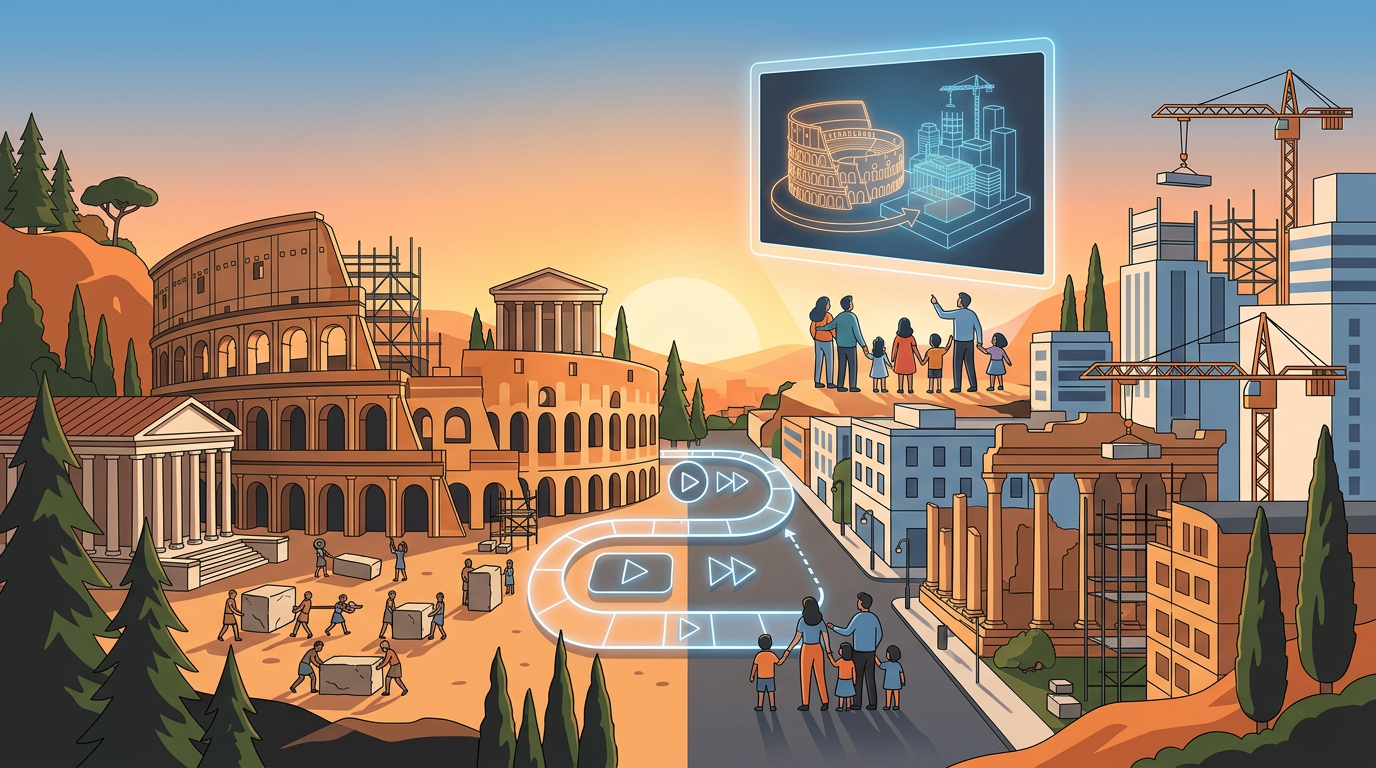
If you’ve ever complained about a local roadwork project taking six months, take comfort in knowing that the citizens of Rome have been dodging scaffolding since the Iron Age.
We often hear the classic idiom that "Rome wasn't built in a day." But seeing what three millennia of constant urban remodeling actually looks like in practice is something else entirely. Thanks to digital creator Christian Ivan, working under the project name City 3D Timelapse, we now have a front-row seat to the longest-running architectural redesign in human history.
Ivan created a mesmerizing 3D animation that tracks the growth, decay, and rebirth of Rome across an astonishing span of time—from 1000 BCE all the way up to 2026.
Three Millennia of Shifting Scenery
The visual journey starts when Rome was little more than a collection of modest settlements scattered across grassy hills. Over the course of the digital playback, thatched huts give way to grand stone temples, bustling forums, and monumental arches. Then comes the rise of the sprawling empire, followed by the dramatic shifts of the Middle Ages, the Baroque makeover, and eventually modern paved streets packed with scooters.
Building a visual timeline spanning thirty centuries isn't something you just improvise on a rainy afternoon. To construct the digital landscape, Ivan pulled historical and cartographic data from reputable academic sources, including historical maps from Euratlas, research from the Bibliotheca Hertziana, and the famously detailed 18th-century Nolli Map of Rome.
While rendering every single doorway across 3,000 years with absolute historical perfection would require a time machine, the project offers a breathtaking macro-level view of how a geographic spot on Earth morphs over centuries.
Not His First Urban Time Machine
If you find yourself mesmerized watching stone walls sprout and shrink like digital mushrooms, Ivan has explored this territory before. Prior to tackling the Eternal City, he released a 3D historical timelapse of Manhattan, compressing the transformation of New York City from a forested island in 1600 to a modern skyscraper grid by 2026.
Comparing the two is a fun exercise in human ambition. Manhattan went from trees to glass towers in roughly four hundred years. Rome, on the other hand, took its sweet time, layering modern structures directly on top of ancient foundations like a giant, delicious lasagna made of concrete and history.
The Otterly Interesting Part
What makes watching a city evolve over thousands of years so compelling is that we tend to think of ancient landmarks as static monuments frozen in time. The Colosseum or the Pantheon feel like they’ve always just been there.
Seeing them pop up in real-time visual context reminds us that every famous ruin was once just a loud, dusty, brand-new construction site that locals probably complained about on their morning commute. Cities aren't static museum displays—they're living, breathing home improvement projects that never actually reach completion.
So the next time your kitchen remodel gets delayed by two weeks, don't stress. Just remember: Rome spent 3,000 years working on its layout, and they’re still not quite finished.
Keep exploring
- The Surprisingly Clever Reason Wombats Poop in Perfect Cubes
- Why Your Favorite Modern Slang Will Sound Hilariously Quaint in 50 Years
- Finally, a Country That Understands Your Desperate Need to Avoid Small Talk
- Take an Otter quiz
Join the conversation
Join the conversation
Kind, funny and useful takes only — that's the otter way.
Loading comments…