
Need a Recharge? Scientists Are Giving Batteries Their Morning Vitamins
If you've ever popped a B12 supplement after a rough night out, your dying smartphone might soon share your recovery routine.
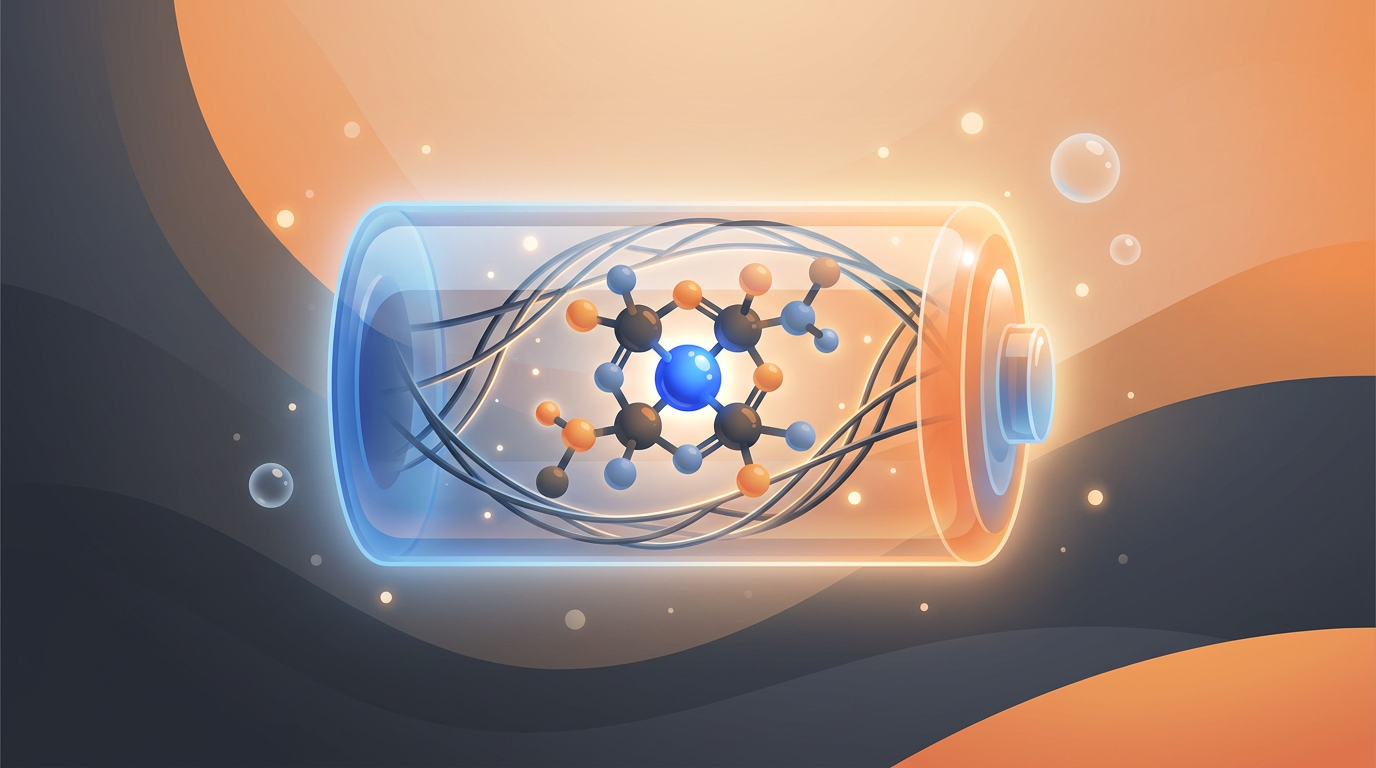
Picture your smartphone at 1% battery. The screen dims, the panic sets in, and you are scrambling for an outlet like a dehydrated desert wanderer spotting an oasis. Now imagine reviving it not with a bulky power brick, but with the exact same nutrient you reach for after an ill-advised Tuesday karaoke night.
It sounds like whimsical sci-fi, but chemists have managed to build a functioning, rechargeable battery prototype that relies on vitamin B12 to keep the power flowing.
Breathing Easy with Zinc and Air
The device in question is a zinc-air battery. Unlike the sealed lithium-ion pack tucked into your phone or laptop, zinc-air systems are essentially open-air breathers. They pull oxygen directly from the surrounding atmosphere to drive chemical reactions, creating an electrical current while keeping the device lightweight.
There has always been a catch, though. For a zinc-air battery to recharge, it needs to run those oxygen reactions in reverse, over and over, without burning out. Doing that efficiently usually demands rare, expensive, and environmentally fraught metal catalysts.
That sent researchers looking for greener, cleverer alternatives. And eventually, their gaze landed on the vitamin aisle.
The Secret Center of Vitamin B12
Most of us know vitamin B12 as the powerhouse nutrient that keeps our nerve cells firing and rescues us from crushing fatigue. But if you zoom all the way down to its molecular architecture, B12 has a secret: tucked neatly into its core is a single cobalt ion.
In the human body, that metal center helps shuffle chemical bonds around during vital metabolic processes. In an experimental battery cell, it turns out to be extraordinarily talented at kickstarting oxygen reactions.
There was just one glaring design flaw. Vitamin B12 is water-soluble. Drop it into an aqueous battery electrolyte, and it promptly dissolves and washes away, rendering the device useless almost immediately.
To lock it in place, the team took inspiration from living biology. Living organisms construct sturdy proteins by stringing amino acids together with peptide bonds. Borrowing that very same architectural trick, the researchers chemically anchored the vitamin molecules onto microscopic, single-walled carbon nanotubes. Mechanically locked to this carbon scaffolding, the B12 stayed put, allowing the prototype to endure 250 complete charge and discharge cycles.
The Otterly Interesting Part
Before finding success with B12, the researchers took an even stranger detour: they tried powering batteries with hemoglobin, the iron-rich protein that transports oxygen in our blood, along with catalase, an enzyme found in liver tissue. While turning batteries into mechanical vampires produced interesting data, vitamin B12 ended up delivering the stamina and catalytic punch they really needed.
Nature spent billions of years perfecting nanoscale chemical factories inside living cells. We spent decades designing energy storage with brute-force synthetic chemistry, only to discover that biology had already engineered the exact catalyst we needed—and tucked it inside our breakfast cereal.
A Balanced Tech Diet
Don't drop a dissolvable vitamin tablet into your phone's charging port just yet. This is still fundamental laboratory research, and scaling bio-friendly zinc-air cells to compete head-to-head with modern commercial power packs remains a major engineering mountain to climb.
Still, the idea that the next frontier of energy storage might come from biocompatible nutrients rather than harsh, toxic industrial processes is genuinely refreshing. The next time you take your morning vitamins, give that little bottle a nod of respect. It might be keeping your future gadgets awake, too.
Keep exploring
- Voyager 1 Just Perfected the Art of Leaving Everyone on Read for Two Full Days
- Nature’s Stubborn Engineer: Why the Wombat Refused to Poop in Spheres
- Meet the Deep-Sea Fish With a Skylight for a Forehead
- Take an Otter quiz
Have something to add?
Join the conversation
Kind, funny and useful takes only — that's the otter way.
Loading comments…