
How a 1990s Nun Living in a Camper Van Became the Internet's Favorite Art Critic
Sister Wendy Beckett lived in solitude, learned art from postcards, and casually became one of the most delightful TV stars of the '90s. Today, a new generation is discovering her magic.
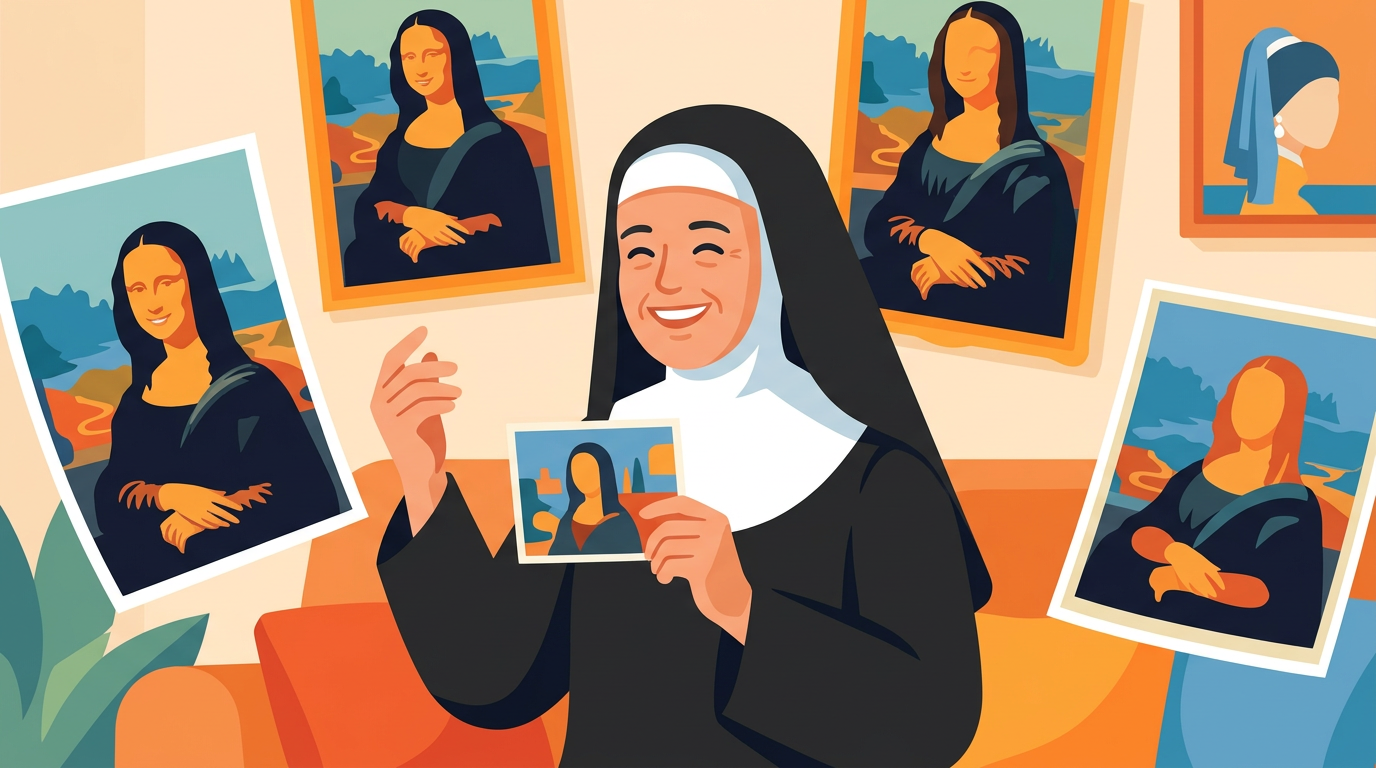
Picture a typical television host. You are probably imagining flawless hair, studio lighting, and sharp formal wear. What you almost certainly are not imagining is a soft-spoken Carmelite nun wearing a traditional black habit, standing in front of a giant Renaissance painting and discussing it with pure, unfiltered delight.
Yet back in the 1990s, Sister Wendy Beckett was exactly that: an unlikely public television icon who brought fine art into millions of living rooms. Years after her death in 2018, short clips of her television broadcasts are experiencing a vibrant digital revival, charming younger audiences across social media feeds.
From Latin Manuscripts to Postcard Fine Art
Sister Wendy’s path to art stardom was anything but standard. Born in Johannesburg, South Africa, in 1930, she joined the Sisters of Notre Dame at age 16. She was extraordinarily bright, later earning top honors in English from Oxford University.
Due to health struggles, she moved in 1970 to a Carmelite monastery in Quidenham, Norfolk, England. There, she lived a largely solitary life in a modest camper parked on the monastery grounds. For years, her primary work was translating medieval Latin manuscripts. But she also possessed a burning passion for visual art. Without the ability to wander world-class galleries, she taught herself art history almost entirely through art books and postcard reproductions sent to her trailer.
A Gourmet Chef and a Saturday Night Live Parody
Her jump from quiet study to public eye happened almost by accident. British television cook Delia Smith encouraged Sister Wendy to write down her insights, leading to her first book, Contemporary Women Artists, published in 1988.
That book caught the attention of television producers, leading to beloved BBC and PBS series in the 1990s, including Sister Wendy's Odyssey and Sister Wendy's Story of Painting. Viewers instantly fell for her warmth, humor, and utterly unpretentious style. She did not hide behind dense academic terms; she spoke about masterpieces with intimacy, awe, and deep human insight. Her cultural footprint grew so large that in 1997, Saturday Night Live even broadcast a hilarious spoof of her, played by actor Nathan Lane.
The Otterly Interesting Part
In a digital landscape filled with fast cuts, hyper-polished production, and frantic energy, Sister Wendy’s slow, passionate commentary feels astonishingly fresh. It turns out that genuine enthusiasm, profound knowledge, and a quiet sense of wonder never actually go out of style—even thirty years later on a smartphone screen.
Have you ever stumbled upon a vintage educational show that instantly won you over?
Keep exploring
- Wile E. Coyote Is Finally Suing Acme, and Honestly? It’s About Time.
- The $25 Concert Gamble: Will You High-Five Olivia Rodrigo or a Venue Pigeon?
- Operator, Give Me Overdrive: The Man Turning Old Landlines Into Guitar Pedals
- Take an Otter quiz
Have something to add?
Join the conversation
Kind, funny and useful takes only — that's the otter way.
Loading comments…