
The Ultimate Anti-Selfie: Why One Photographer Spent Half a Year on Single Shots
While we struggle to wait three seconds for a webpage to load, photographer Robert Charles Mann spent six months capturing single exposures of the sun tracing across the sky.
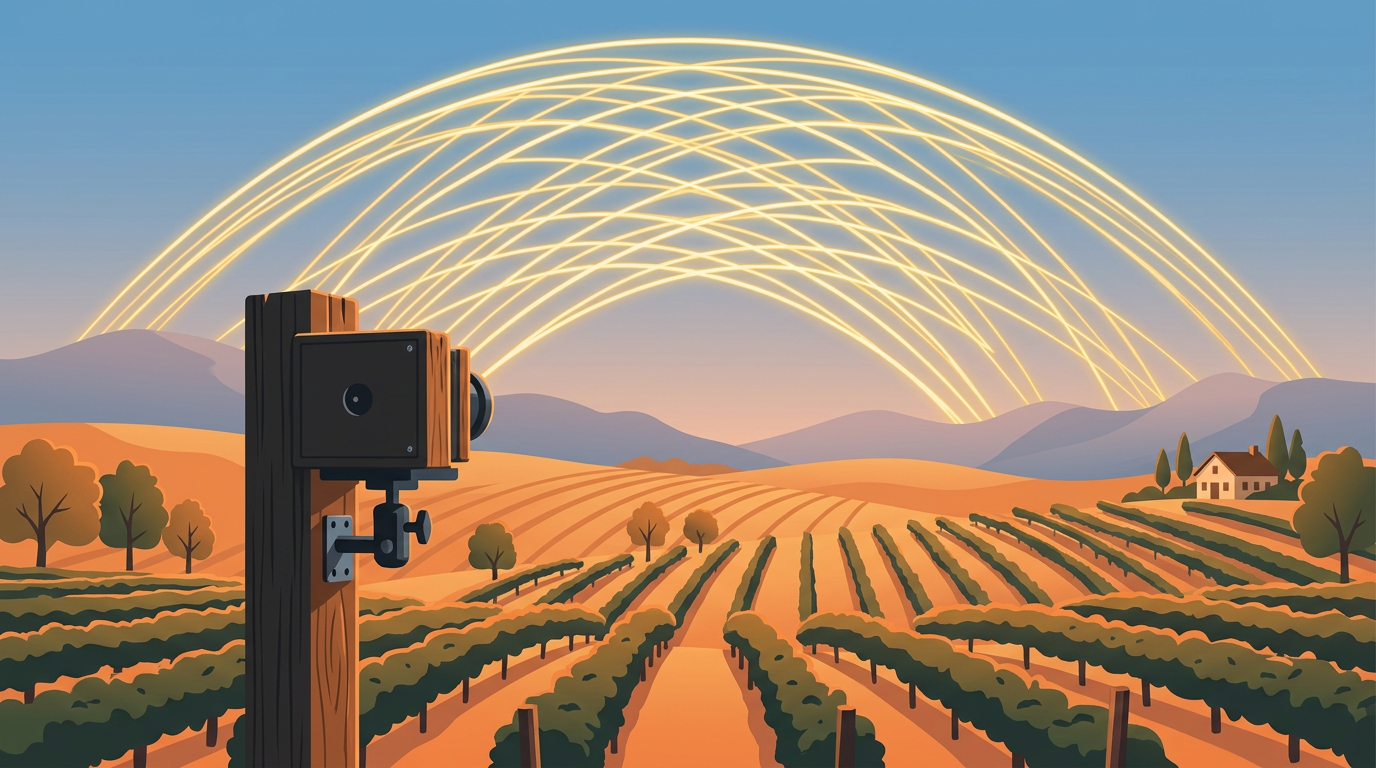
We live in a world where if a smartphone camera takes longer than two seconds to focus, we start wondering if it is time for an upgrade. Enter photographer Robert Charles Mann, who decided that true artistic satisfaction takes a bit more patience—specifically, about half a calendar year.
Using simple, self-constructed pinhole cameras made from basic materials, Mann set up a long-term photography experiment at Château Miraval in France. He opened the shutters at the winter solstice of 2024 and left them open continuously until the summer solstice of 2025. No digital sensors, no memory cards, and absolutely no instant previews.
Streaks of Time Across the Sky
The resulting collection of 50 long-exposure images has been compiled into a photobook titled Solargraphs, published by Hemeria. Because the exposures ran uninterrupted for six months, the sun's daily arc across the heavens is recorded not as a single spot, but as glowing, stacked ribbons of light tracing the sky above the historic estate's architecture and vineyards.
It turns out that when you leave a camera open for six months, the world paints a very different picture than what our eyes normally register.
From High Fashion to Ultra-Slow Art
Mann, who was born in the United States and currently resides in the Loire Valley, spent much of the 1980s and 1990s working as a fashion and film photographer. Pivoting from split-second commercial photo shoots to a technique where a single frame takes half a year is about as dramatic a change of pace as you can get.
The project even caught the attention of Brad Pitt, who wrote the introduction for the monograph alongside an analytical essay by Mikaël Faujour. Pitt noted how remarkable it is that a single static image can simultaneously capture the grounded history of a physical place and the cosmic reality of Earth's orbit around the sun.
The Otterly Interesting Part
Solargraphy is essentially time travel in reverse. Because the pinhole camera remains open for half a year, anything moving too quickly simply vanishes. People strolling through the frame, passing vehicles, grazing animals, and fast-moving storm clouds do not stay in one place long enough to leave a mark on the photographic paper. The only things that survive the six-month exposure are the immutable ground, the permanent structures, and the brilliant, steady march of our star across the sky.
So next time you take thirty variations of the same picture trying to find your best lighting, consider taking the ultra-slow route instead. All it takes is a light-tight box, a pinhole, and six months of total self-control. Would you have the patience to leave a camera unattended until the next season rolls around?
Keep exploring
- Pakistan Just Merged Two Sanctuaries to Create a 250-Mile River Superhighway for Dolphins
- How Ancient Philosophy Turned My Household Chores Into an Existential Crisis
- How Dolly Parton Built an Empire—and Saved Her Smoky Mountain Home
- Take an Otter quiz
What's your take?
Join the conversation
Kind, funny and useful takes only — that's the otter way.
Loading comments…