
Trees Have Hidden "Muscles"—and Better Posture Than Any of Us
Scientists put trees in a disorienting floating sphere and discovered they flex internal tissues just like human muscles to correct their posture.
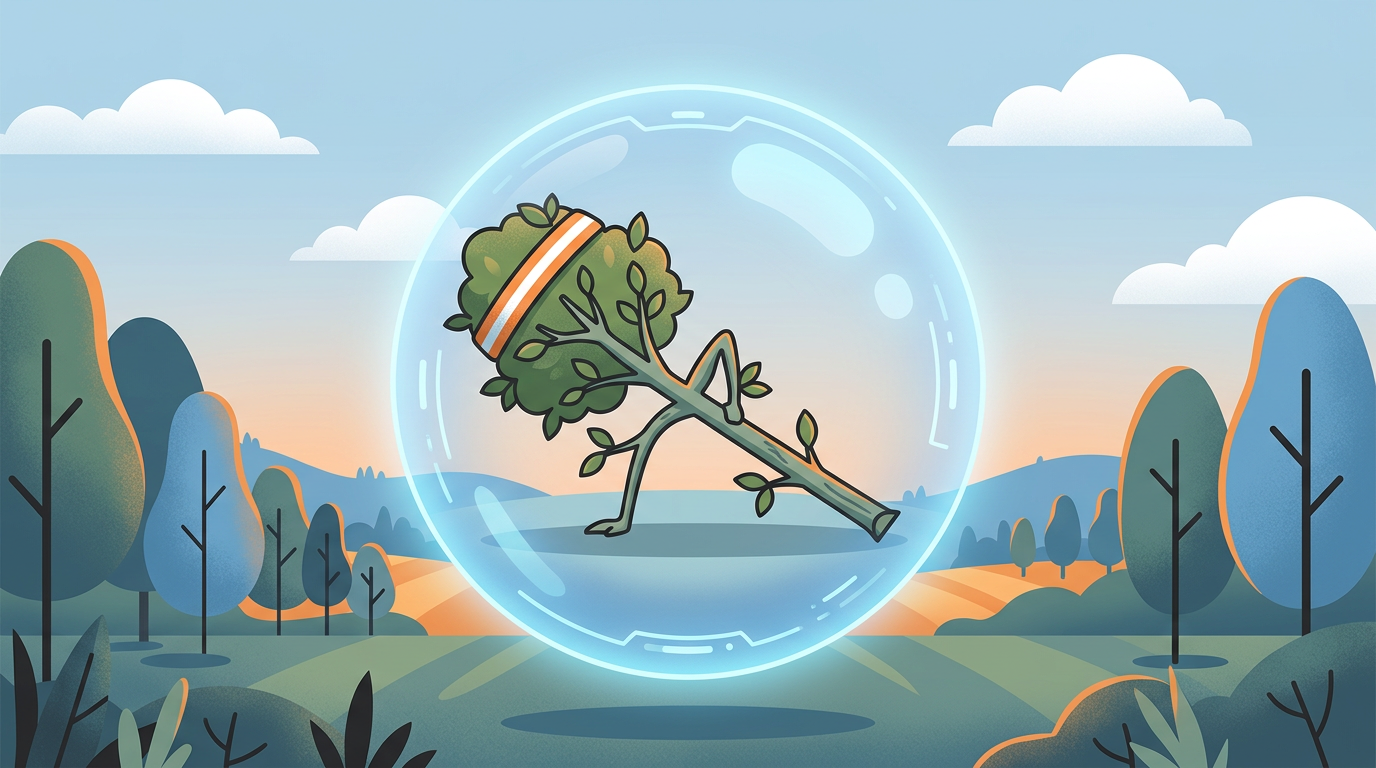
Posture check! If you are currently reading this while hunched over like a cozy desk goblin, take a breath and roll those shoulders back. Done? Great. Now prepare to feel slightly out-shined by the nearest poplar tree, because researchers have discovered that trees have internal core discipline that would put a Pilates instructor to shame.
We used to think trees were pretty passive about standing tall. Sure, they grow toward the sun and fight against gravity, but it was generally assumed they just stacked new wood on top of old wood like wooden legos until they made it work. As it turns out, trees actually have a biological sense of their own posture—known as proprioception—and actively flex specialized internal tissues to pull themselves straight whenever they start to lean.
The Floating Disco-Sphere Experiment
To figure out how trees stay so impeccably aligned, researchers had to trick them into losing their sense of up and down. They took young poplar trees and placed them inside a horizontally rotating platform housed within an evenly illuminated sphere. This effectively canceled out standard environmental directionality—no downward tug of gravity in one fixed spot, and no single light source to reach for.
Without external hints telling them which way was up, you might expect the trees to just give up or grow in chaotic squiggles. Instead, something fascinating happened: the trees noticed their own trunks were bent and started working to straighten themselves out purely based on internal body awareness.
Opposing Muscles Made of Wood
Before this test, scientists believed that trees produced "tension wood"—a high-strength, contractive wood layer—solely on the upper side of a leaning stem to pull it upward. But the disorienting sphere experiment revealed a much more dynamic system.
When light and gravity cues were wiped out, the poplars stopped building tension wood on the curved outer side and rapidly switched to growing it on the opposite side instead. By dynamically controlling cellular processes to create tension on either side, the trees were essentially using opposing sets of "muscles" to tug their trunks back into alignment. It is the plant equivalent of flexing your biceps and triceps to keep your arm straight.
The Otterly Interesting Part
Proprioception is the reason you can touch your finger to your nose with your eyes closed—it is your brain keeping track of where your body parts are in space without looking. Realizing that plants possess their own version of this internal self-awareness completely changes how we view static greenery. A tree isn't just standing there soaking up rain; it is constantly engaged in a silent, high-precision balancing act, making tiny cellular adjustments every single day to stay tall.
So the next time you catch yourself slouching in your chair, take a lesson from your leafy neighbors. They are out there doing non-stop core work with zero gym membership required.
Keep exploring
- Meet the 'Sea Muppets': Nature’s Cutest Case of Copy-Paste Evolution
- Need to Memorize Something Fast? Try Turning Your Living Room into a Crime Scene
- Under UV Light, Europe’s Most Toxic Salamander Is Basically a Walking Glow Stick
- Take an Otter quiz
What's your take?
Join the conversation
Kind, funny and useful takes only — that's the otter way.
Loading comments…