
The Ultimate Flatpack: When You Could Order an Entire Two-Story House by Mail
Before anyone ever cried over an Allen wrench, our ancestors were hauling twenty-five tons of lumber home from the train depot and building entire houses out of an instruction book.
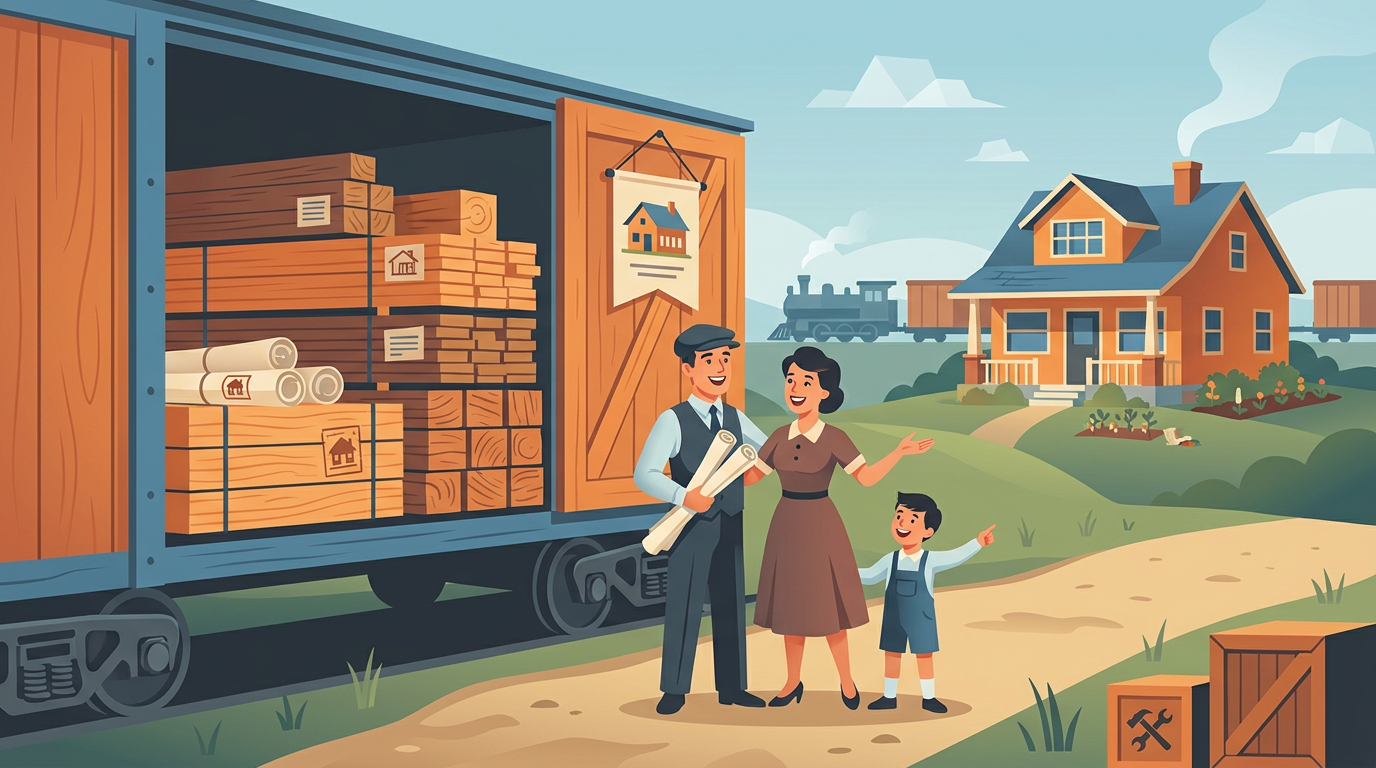
If you have ever spent four hours on a Saturday night swearing at a laminate bookshelf because you put panel D into slot 14 backward, take heart. A century ago, your great-grandparents were taking on roughly the same project, except their flatpack was a three-bedroom craftsman with a covered porch, a parlor, and chimney flashing.
Between 1908 and 1940, Sears sold tens of thousands of mail-order homes. You picked your dream residence out of a catalog, mailed off an order form, and waited for a freight train to roll into town bearing practically every board, hinge, and roof shingle you needed to put a roof over your family's head.
The Ultimate Impulse Buy
It all kicked off in 1908 with a publication rather boldly titled The Book of Modern Homes and Building Plans. That first catalog showcased 22 different house designs, priced anywhere from a modest $650 to an ambitious $2,500. Sears eventually even began offering mortgages, essentially becoming your architect, lumberyard, hardware store, and banker in a single stroke.
At first, buyers received piles of raw lumber they had to cut to fit themselves. But in 1915, Sears rolled out their genuine stroke of genius: pre-cut, pre-measured timber. Every joist, stud, and rafter arrived already trimmed to the exact dimension required, accompanied by a comprehensive instruction manual.
Instead of a crew of master carpenters carefully scribing and notching timber frame joints for six months, an ambitious homeowner with a hammer, a couple of willing neighbors, and an unshakeable faith in printed instructions could erect a whole two-story domicile in a matter of weeks.
The Freight Depot Shuffle
There was, however, one catch that modern delivery apps have spoiled us on: there was no front-door drop-off.
The entire house—weighing somewhere in the neighborhood of twenty-five tons—arrived at the local railroad siding packed inside a boxcar. Sears gave buyers a limited window to unload the car before charging storage fees. That meant borrowing every neighbor's wagon or flatbed truck to haul countless loads of framing timber, lath, millwork, and varnish from the depot to the building lot.
Because nobody in their right mind wanted to haul thousands of boards ten miles over unpaved dirt roads with a team of tired horses, kit homes settled in distinct clusters. If you walk through an older American neighborhood located within a mile or two of a historic railway depot, there is a very decent chance you are strolling through a live catalog spread.
The Secret Fingerprints in the Walls
Because Sears kit houses were built from plans that look quite similar to many other period homes, authenticating one today is part architectural history, part treasure hunt. And the best clues are hiding in places visitors never look.
To help great-grandpa know which 2x4 went where, Sears stamped identification codes near the ends of framing lumber. If you poke your head into an unfinished attic or peer up between the joists in a damp basement, you might spot crisp ink markings featuring a capital letter paired with a number, matching the original Sears blueprint diagrams. In some cases, paper railway shipping labels are still preserved, sealed undisturbed behind baseboards or door casings.
Even the plumbing got branded. During the 1930s, Sears manufactured cast-iron bathtubs with an unmistakable hallmark: a subtle, embossed "SR" stamped into the iron. Find that encircled logo under the rim, and you have likely confirmed that your bathroom was ordered by mail.
The Otterly Interesting Part
There is something wonderfully romantic about the sheer, unbridled confidence of the kit-house era. Today, we call an electrician to swap out a light switch and hire handymen to mount a television. A hundred years ago, a clerk or schoolteacher would flip through a catalog during breakfast, sign their name on a promissory note, and casually decide, Yes, I think I will assemble a two-story colonial this spring.
So if you live in a home built between the World Wars, grab a flashlight and head up to the attic. Check the edges of the roof rafters for small stamped letters, or take a peek behind a loose bit of closet trim. You might just discover that the walls keeping out the rain were once an enormous jigsaw puzzle sent by rail.
Keep exploring
- London's Natural History Museum Built a Fancy Garden and Accidentally Hosted 92 Wild Squatters
- Cubicle Zen: The Sublime Digital Playground That Might Just Save Your Coworkers’ Sanity
- The Hilarious Reason Almost No Conversation Ends When Anyone Wants It To
- Take an Otter quiz
Have something to add?
Join the conversation
Kind, funny and useful takes only — that's the otter way.
Loading comments…