Why Your Favorite Modern Slang Will Sound Hilariously Quaint in 50 Years
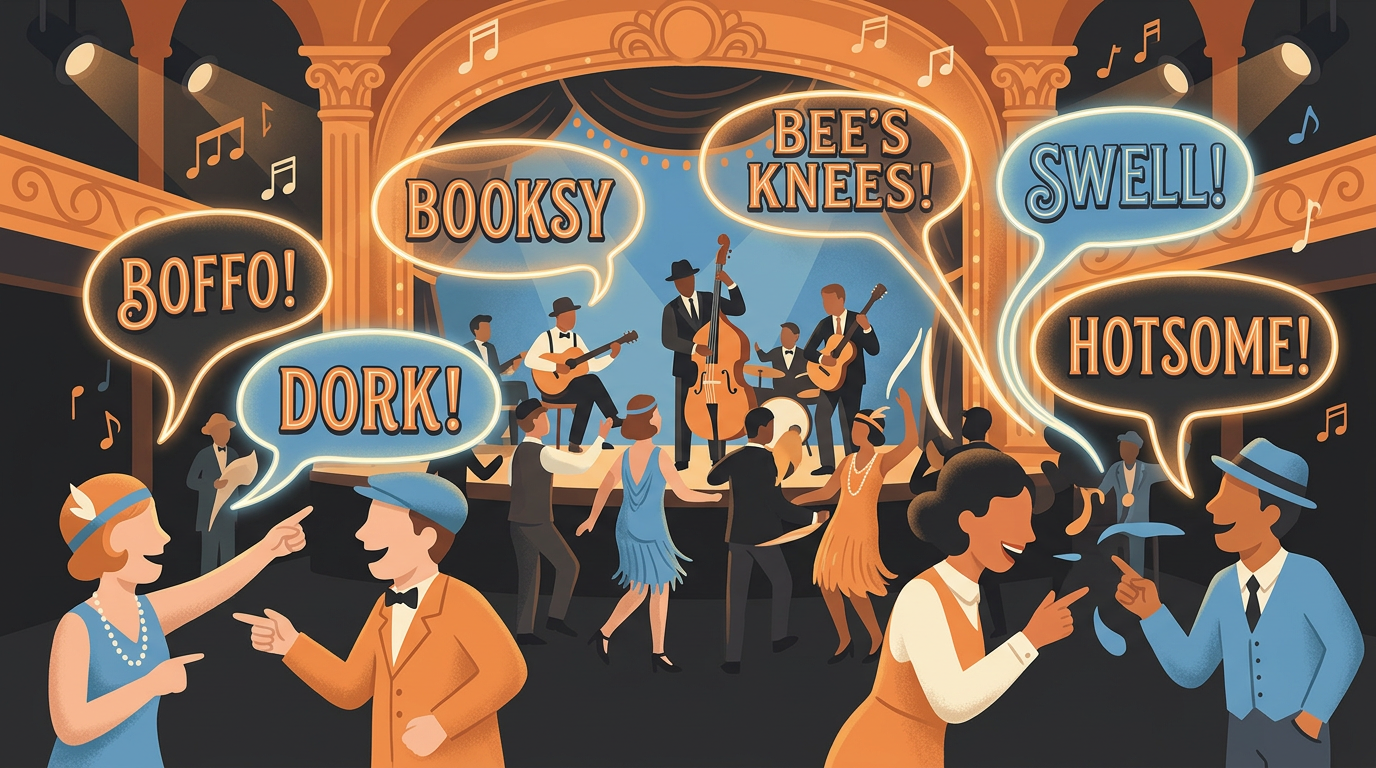
Before anyone was dropping modern catchphrases, our ancestors were calling bookworms 'booksy' and stashing cab fare in their 'mad money' purses.
Words Have an Expiration Date (And That’s Great)
Every generation thinks they invented coolness. We coin snappy phrases, drop them into casual conversation like verbal fireworks, and assume we've hit the absolute peak of human communication. But language has a hilarious habit of aging like a forgotten banana in a backpack. Give it a few decades, and today's cutting-edge slang inevitably sounds like a museum exhibit.
If you ever want a cozy reality check, just look at what was considered prime vocabulary around the time your grandparents—or even your great-grandparents—were taking their first steps.
The Roaring Twenties: Mad Money and Wet Blankets
Step back to 1923, and you might hear a young woman talking about her "mad money." This wasn't just pocket change; it referred specifically to the emergency cash a woman carried on a date in case her companion turned out to be less than gentlemanly and she needed to hail her own taxi home. Talk about practical slang!
By 1924, if someone ruined the mood, they weren't called a buzzkill or a party pooper. They were officially dubbed a "wet blanket"—a nickname inspired by literally smothering a flame. And in 1927, actress Clara Bow rocketed to stardom as the archetypal "It Girl," setting the blueprint for magnetic personal charm long before modern internet slang was ever uttered.
The Thirties: Getting Booksy and Boffo
As the 1930s rolled around, language kept evolving in delightful ways. In 1930, if you spent your Saturday night curled up with a thick novel instead of hitting the town, people might have affectionately labeled you "booksy." It was the era's charming descriptor for someone studious or fond of reading.
A few years later, in 1934, if a theatrical show was a smashing success or a comedian's joke landed perfectly, it was declared "boffo." It was punchy, weirdly satisfying to say, and signaled a hit. Imagine telling your group chat that a new movie is absolute boffo—you’d probably get hit with a wall of confusion, but technically, you’d be historically accurate.
Fast-Forwarding the Decades
By the time the 1960s rolled around, campus life was building its own unique dialect. College-associated terms like "brewski" and "kegger" gained popularity during this era, giving weekend social gatherings a whole new vocabulary that still echoes around college towns today.
The Otterly Interesting Part
Here’s the thing about slang: it isn't just silly noise. It's a time capsule. Slang captures the exact anxieties, technologies, and social dynamics of its era. "Mad money" existed because mobile ride-hailing didn't, and Prohibition-era slang hit hard during a time when social nightlife had its own secretive rules.
The Future of Cool
So the next time you hear someone use a brand-new piece of trendy lingo, don't cringe. Embrace it! Just remember that in fifty years, future generations are going to look at our current catchphrases the exact same way we look at "booksy" or "boffo"—with a warm, confused smile and a gentle sense of wonder.
What is your favorite vintage phrase that deserves a modern comeback?
Keep exploring
- Finally, a Country That Understands Your Desperate Need to Avoid Small Talk
- Sherlock Holmes Stole His Entire Vibe from Edgar Allan Poe (Then Insulted Him)
- Herbie the Cat Has a Triangular Face, a Gentle Wobble, and Zero Regrets
- Take an Otter quiz
Have something to add?
Join the conversation
Kind, funny and useful takes only — that's the otter way.
Loading comments…