Why Older Generations Text Like Ominous Villains (And Blame 10-Cent Texting)
A Harvard linguist explains how postcards and mid-2000s flip phone bills trained older generations to text with endless ellipses.
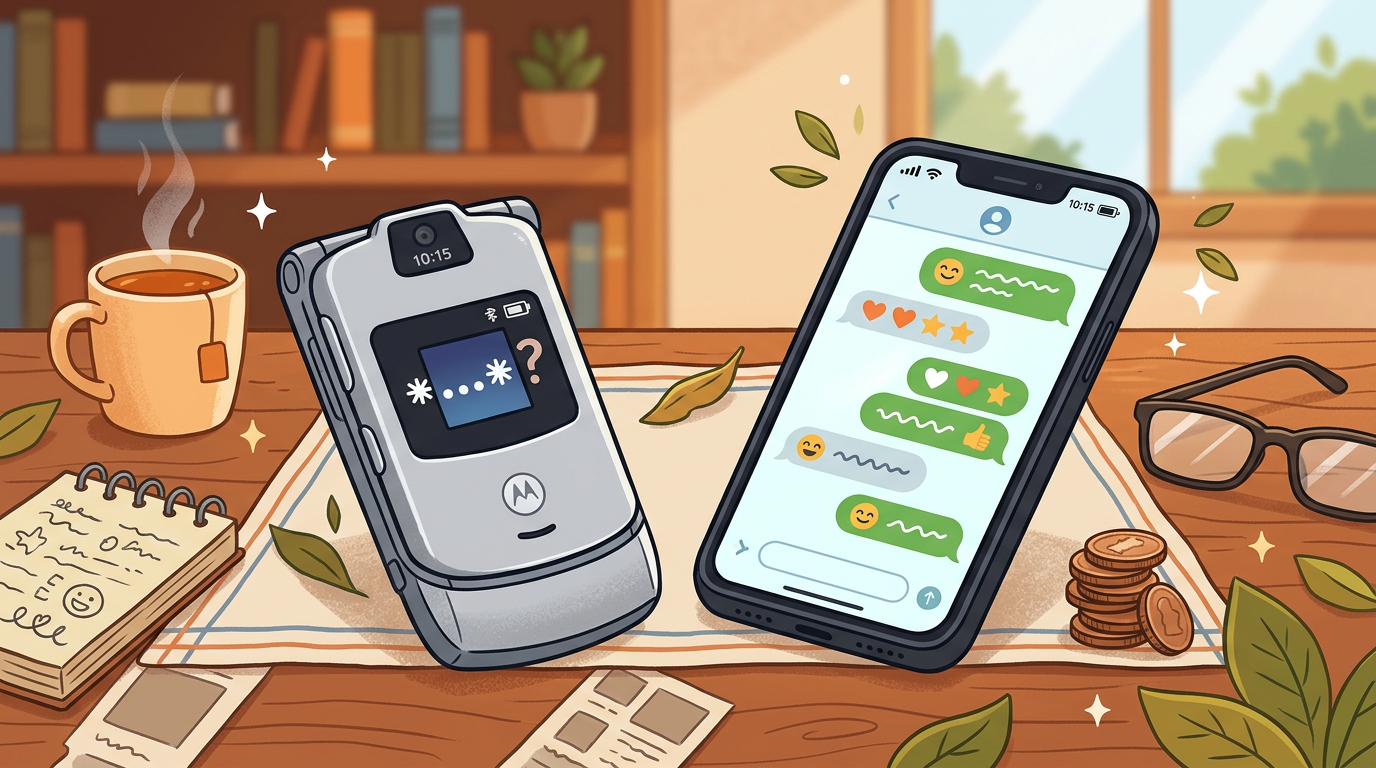
If you’ve ever received a text from a parent that reads, "Dinner was great... see you soon..." you might have wondered if they were leaving a cryptic clue before vanishing into thin air. But there’s actually a brilliant, historical reason for all those mysterious dot-dot-dots.
The Secret History of the Dot-Dot-Dot
Harvard linguist Adam Aleksic, who breaks down language quirks as @etymologynerd on TikTok and in his book Algospeak, recently shared the logical evolution behind this generational text habit. It turns out older senders aren't trying to build dramatic suspense. They’re just operating on muscle memory forged by handwritten postcards and early flip phones.
Back when physical mail was the primary way to send quick travel updates, people regularly used ellipses on postcards to separate distinct thoughts without wasting precious paper real estate. Instead of starting a brand-new line for every idea—which took up valuable space—a simple triple-dot bridged the gap between "The weather is lovely" and "Uncle Bob bought a hat."
The 10-Cent Text Era
Then came the golden era of T9 predictive texting and early cell phones. Before unlimited data plans existed, mobile carriers charged consumers per individual SMS message, usually enforcing a strict limit of 160 characters per text.
Sending three short, separate messages meant getting hit with three separate charges on the monthly bill. To save cash and stay under the character limit, senders packed multiple thoughts into a single block of text, stringing them together with ellipses rather than pressing send multiple times.
Modern smartphone users eventually solved this by hitting the "Enter" key to break thoughts into separate text bubbles. But for anyone who spent years carefully counting characters so their bill wouldn't explode, old habits die hard.
A Tale of Three Texting Eras
Every generation has left its mark on how we communicate through screens. Millennials and Gen Xers tend to cling to formal grammatical rules (and will happily defend the Oxford comma). Gen Z often favors shorthand, lowercase lettering, and emojis—and famously tends to interpret a standard sentence-ending period as an indicator of a passive-aggressive tone. Meanwhile, Boomers keep the humble dot-dot-dot alive and well.
The Otterly Interesting Part
Language isn't static; it constantly adapts to the physical tools we use to write it. Just as telegrams gave us short, punchy phrasing because every word cost money, early cell phones created a whole punctuation style that still lingers on our screens today.
So the next time you get a text that reads "Heading to the grocery store... let me know if you need milk...", don't panic. There's no dark twist coming. It's just a friendly reminder of a time when every extra message cost ten cents.
How does your family handle texting punctuation? Are you an ellipsis loyalist or a single-bubble speedster?
Keep exploring
- Small Bike, Big Energy: The 1973 Solo World Tour That Made History
- Why One Man Spent 29 Years Rolling a 12-Foot Ball of Twine (And Why You Should Visit)
- Why Your Grandma and Your Teenager Are Using the Exact Same Words to Mean Opposite Things
- Take an Otter quiz
What's your take?
Join the conversation
Kind, funny and useful takes only — that's the otter way.
Loading comments…