Why Are Birds Scared of Women? A Park Guide to Looking Less Like an Apex Predator
Scientists found urban birds flee from women much sooner than from men. Here is how to tone down your naturally terrifying aura in the park.
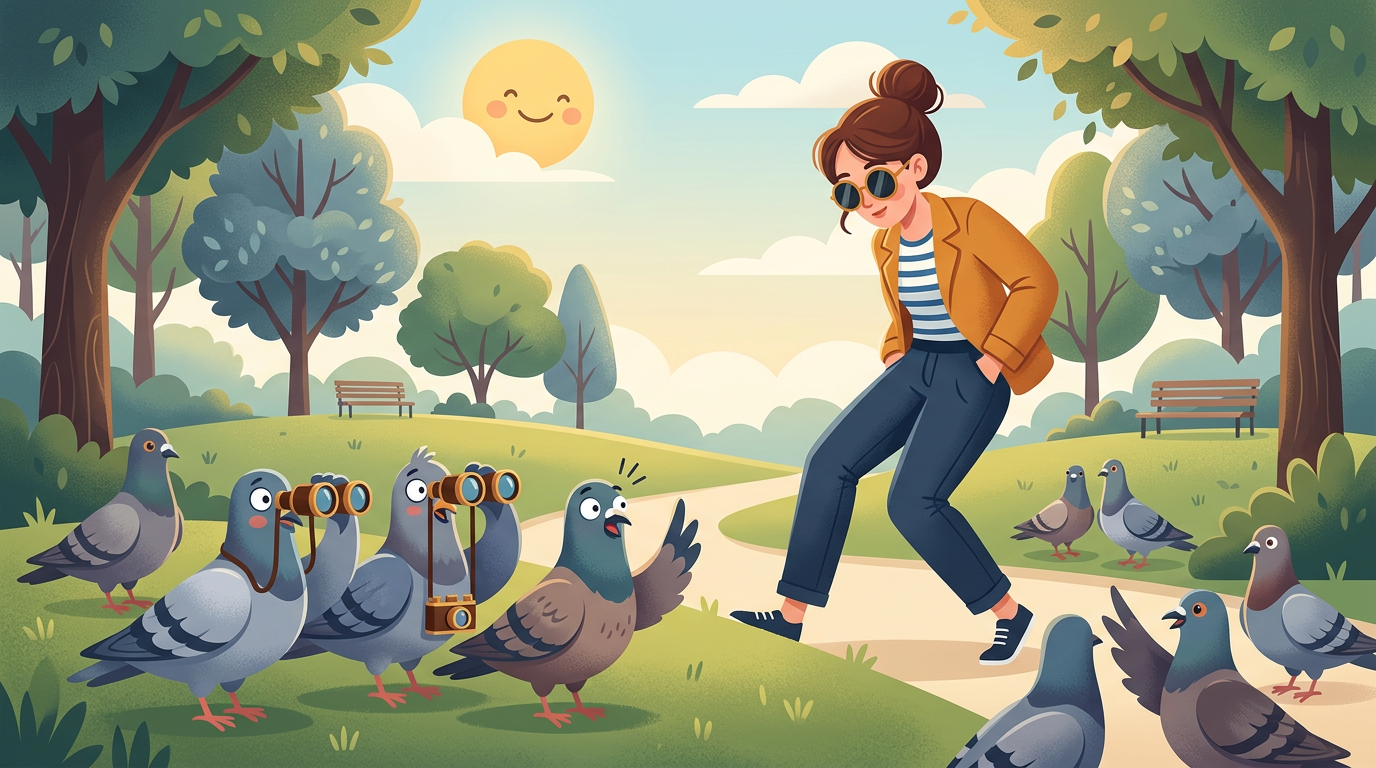
Have you ever tried to casually admire a city bird, only for it to launch into an emergency vertical takeoff like you are a stealth bomber? If you are a woman, congratulations: it turns out you are officially the most terrifying thing in the park.
Researchers recently set out across five European countries to test how close humans could get to wild urban birds before the birds lost their cool. They tested 37 different bird species—ranging from timid magpies to the kind of city pigeons that usually try to steal fries directly out of your hand. To keep things fair, the human walkers were matched by height and wore identical clothing.
The result? Across every single city tested, birds consistently fled much earlier when approached by a woman. On average, men were able to get about a full meter closer before triggering an avian panic reaction.
The Mystery of the One-Meter Buffer
Here is the wild part: nobody actually knows why this happens.
Field ecologists had long operated under the assumption that animals view humans as gender-neutral background noise—just a generic bipedal threat level. But this discovery completely flipped that assumption on its head.
Is it something about walking style? Chemical signals? Subtle variations in body silhouette? Science has not proven any of those theories yet. Right now, all we know for sure is that to a sparrow minding its own business on a bench, a woman walking toward it radiates pure, unadulterated apex predator energy.
The Park Guide: Master the Casual 'Guy Shuffle'
If you are tired of being treated like a mythical monster while trying to enjoy your morning coffee, don't worry. Here is a handy tactical guide for women who want to dial back their terrifying natural presence and blend in with the local wildlife.
1. Adopt the Slouch of Indifference
Women often walk with intent, good posture, and direction. To a bird, high intent looks like active hunting. To pass the avian vibe check, lower your shoulders, aim for a mild slouch, and look like you are trying to remember where you parked.
2. Practice Unfocused Meandering
Do not lock eyes with the pigeon. In fact, do not lock eyes with anything. Walk in a slightly inefficient zig-zag. The goal is to project the exact energy of someone looking for a dropped earbud.
3. Deploy the Pocket-Hands Maneuver
Tuck your hands casually into your coat pockets. This immediately hides arm movement, softening your outline and making you look 40% less like a swooping hawk preparing for launch.
The Otterly Interesting Part
What is really fascinating about this discovery is what it says about urban wildlife. We tend to think of city birds as desensitized little feathered chaos agents who barely notice us. But in reality, they are running incredibly detailed risk assessments on every single human walking past. They aren't just seeing a person; they are reading subtle cues we don't even realize we're giving off.
So the next time a flock of city pigeons scatters as you walk by, don't take it personally. Just smile, channel your best relaxed slouch, and take comfort in knowing that in the feathered kingdom, you are undeniably powerful.
Keep exploring
- One Passenger, Zero Armrest Battles: The Airline Flight That Turned Into a Private Jet Experience
- 70 Street-Legal Cars Just Drove Straight Into Berlin’s Lakes. On Purpose.
- Why Nordic Knitwear Is Secretly a Masterclass in Cold-Weather Tech
- Take an Otter quiz
Otterly agree? Tell us why.
Join the conversation
Kind, funny and useful takes only — that's the otter way.
Loading comments…