
Why Did 17-Year-Olds in the 1970s Look Like 42-Year-Old Accountants?
Ever wonder why vintage high school yearbooks look like a convention of regional bank managers? Here is the quirky science behind retro aging.
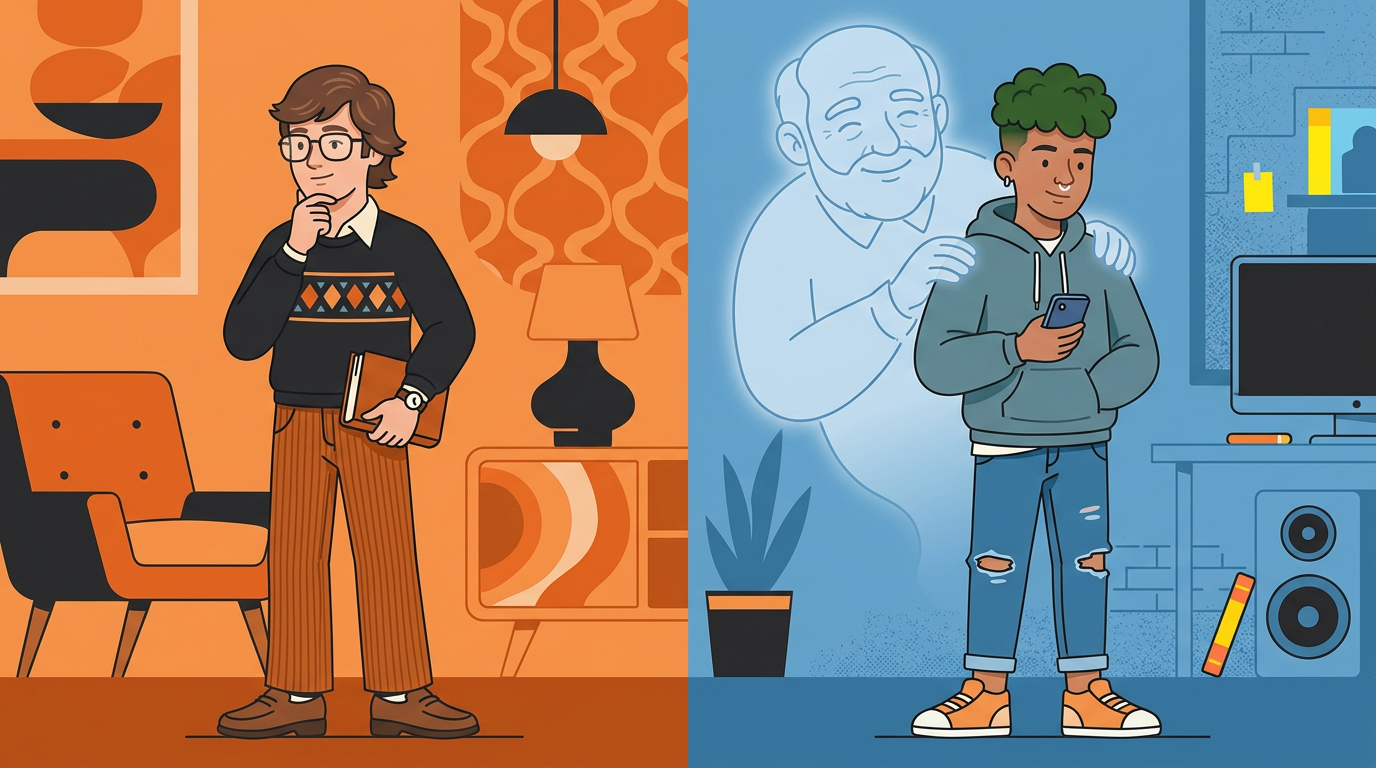
If you have ever flipped through a box of old black-and-white family photos, you have probably experienced the classic temporal double-take. You pull out a picture of your grandfather in high school, expecting to see a fresh-faced kid, only to be greeted by a man who appears ready to explain tax brackets, complain about his sciatica, and pour you a black coffee.
Why did young people in the past look so inexplicably old? Were teenagers in 1972 secretly born at age thirty-five, or is our modern brain playing tricks on us?
It turns out the answer is a fascinating mix of actual biological evolution in daily life and a clever bit of psychological trickery. Here is why historical youth looks so surprisingly mature—and why today’s ultra-trendy teenagers might be in for a hilarious surprise a few decades down the road.
The Biology of Looking Fresh
First, let us give credit where credit is due: humans today genuinely age differently on a physical level than our ancestors did.
Over the last two centuries, U.S. life expectancy has more than doubled, currently sitting at around 76 years. A huge reason for this shift stems from massive public health leaps made between the 1880s and the 1920s. Clean water initiatives, modern sanitation, food safety regulations, and a better understanding of disease transmission changed the baseline of human health forever.
Beyond basic survival, our day-to-day environment underwent a total revolution. Historically, a huge portion of the population worked intensive manual labor outdoors—think Victorian chimney sweepers, farmhands, and factory workers exposed to severe weather and industrial grime. Today, millions of us work in climate-controlled offices with central air conditioning.
Add in modern sunscreen, advanced dental technology, and better skincare, and our faces simply do not take the same physical beating that earlier generations endured. We are living longer, healthier lives with intact teeth and significantly less sun damage.
The Style Trap: Why Hairstyles Age in Reverse
While biological factors explain part of the puzzle, the biggest reason people in vintage photos look older is entirely inside our own heads. It is a phenomenon known as retrospective bias.
Think about the signature fashion choices of past decades: 1960s horn-rimmed glasses, 1970s thick moustaches, or 1980s feathered hair. When those styles were brand new, they were the peak of youth culture. Teenagers wore them to look cool, modern, and rebellious.
However, people tend to settle into the aesthetic of their young adult years and stick with it as they grow older. As those stylish 1970s teenagers aged into beloved grandparents, they kept wearing their preferred cuts and frames. Over time, your brain reshuffled its mental filing cabinet. You no longer associate feathered hair or heavy plastic glasses with energetic nineteen-year-olds; you associate them with your lovely Nana and Papa.
So when you look at a photograph of a high school senior from 1955, you aren't actually seeing a kid who looks sixty. You are seeing a teenager wearing the exact outfit that your brain now associates with senior citizens.
The Otterly Interesting Part
This leads us to a delightfully chaotic realization about fashion evolution. Style choices are constant shape-shifters, and no trend is safe from the relentless march of time.
Right now, contemporary youth culture is defined by distinct staples: Permed broccoli cuts, nose rings, oversized thrifted sweaters, and chunky sneakers. To anyone living in the present, this combination screams 'modern youth.'
Now, fast-forward fifty years. Imagine a world where a retired grandfather in the year 2075 sits on his porch wearing a fading nose ring, gently patting the remaining curls of his silver broccoli cut while reading the news on a holographic pad. His future grandkids will flip through digital archives from the 2020s, spot a group of current high schoolers, and think, 'Wow, why did teenagers back then look like vintage nursing home residents?'
Staying Young in the Mind
Whether you want to keep a youthful appearance or fully lean into retro charm comes down to how you navigate style. Staying visually modern often comes down to periodically updating personal style choices—tweaking clothing fits, updating shoe choices, or trying a new haircut rather than keeping the exact look you had at twenty-one.
Or, you can simply embrace the cycle. Wear what makes you happy, rock your favorite cut, and let future generations puzzle over your photographs. After all, today’s cutting-edge trend is always just a few decades away from becoming tomorrow’s granddad aesthetic.
Keep exploring
- Want to Win Wordle 99% of the Time? Stop Trying to Guess the Right Answer
- Proof That Even a T. Rex Couldn't Sneak Past a Science Teacher
- Is Your Cat Being Rude, or Are They Secretly Obsessed With You?
- Take an Otter quiz
Join the conversation
Join the conversation
Kind, funny and useful takes only — that's the otter way.
Loading comments…