Duped by an Illusion? Don't Worry, Your Brain Is Just Living in the Future
Stared at a weird photo and had to double-take? Relax—falling for optical visual tricks just means your brain's prediction engine is working overtime.
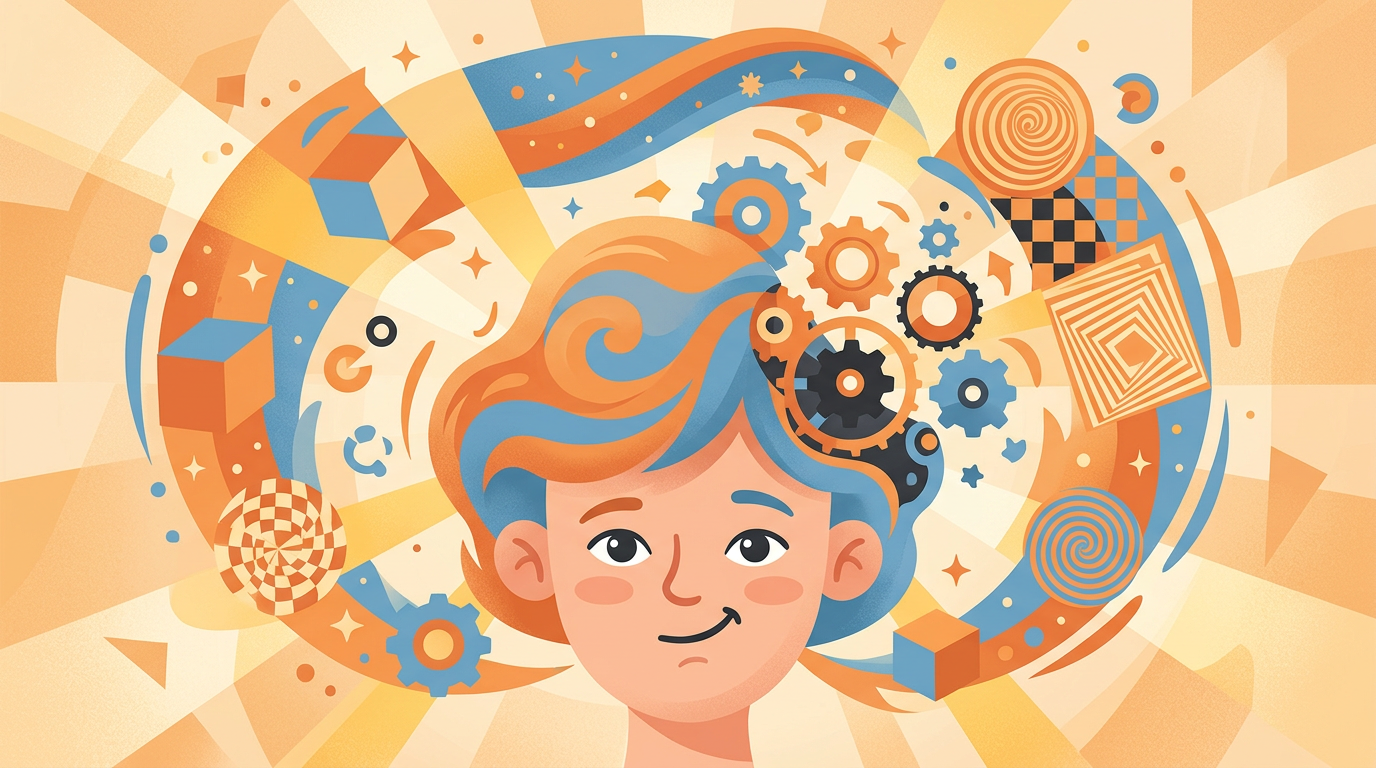
Have you ever scrolled past a photo, stopped, squinted, and thought, Wait, is that dog floating? Or maybe you saw a snapshot of a shadow that looked suspiciously like a mythical creature standing on a city street. Don't worry—you haven't lost your mind. In fact, falling for a bizarre visual glitch just means your brain is working hard behind the scenes to keep you alive and well.
Here is a delightful little secret about human sight: your eyes don't actually stream live, unedited footage like a high-definition video camera. There is a tiny, measurable delay between the moment light strikes your retina and the moment your brain finishes processing the visual signal. To bridge this gap, your gray matter does something astonishing: it relies on predictive coding. Essentially, your brain guesses what is about to happen roughly a tenth of a second in advance, constantly serving you a visual preview of the very near future.
When the Brain's Graphics Card Glitches
Most of the time, this internal prediction engine works seamlessly. But every now and then, a weird real-world perspective or strange camera angle throws a wrench in the gears. Take the famous expanding hole illusion, for example. When you stare at a dark central space surrounded by a gradient pattern, your brain instantly assumes you are walking into an unlit tunnel or dark cave.
A study led by researchers at the University of Oslo discovered that looking at this static image tricks your nervous system so thoroughly that your pupils actually dilate, widening physically to let in more light for a pitch-black room that doesn't even exist! Your body prepares for the dark before your conscious mind even realizes it's staring at a flat screen.
Built by Your Environment
What makes these visual tricks even more fascinating is that your personal environment shapes how your mind interprets the world. Take the classic Müller-Lyer illusion, where two lines of identical length look completely different depending on whether arrowheads point inward or outward at their ends.
Scientists have found that people raised in urban settings—surrounded by square rooms, rectangular buildings, and endless right angles—process these depth cues differently than folks who grew up in wide-open, natural settings. Your brain literally builds a customized visual cheat sheet based on the architecture of your childhood surroundings.
The Otterly Interesting Part
We happen to live in the golden age of visual absurdity simply because everyone carries a camera everywhere they go. Decades ago, if a funny angle made a lamp look like a giant hat on your friend's head, only the people in the room got to laugh about it. Today, that accidental moment gets captured, uploaded, and analyzed by millions of people who are all willing victims of the exact same brain shortcut.
So the next time a strange photo makes you double-take, give your head a little nod of appreciation. You aren't easily fooled—your brain is just running ahead of real time, doing its absolute best to guess what comes next!
Keep exploring
- Missed Trash Day? Congratulations, You Have a Halloween Costume
- 'I'm Here Live, I'm Not a Cat': The Video Call Blunder That Restored Our Faith in Humanity
- The AI Chef That Turned a Breakfast Sandwich Into Bacon Soda
- Take an Otter quiz
What's your take?
Join the conversation
Kind, funny and useful takes only — that's the otter way.
Loading comments…